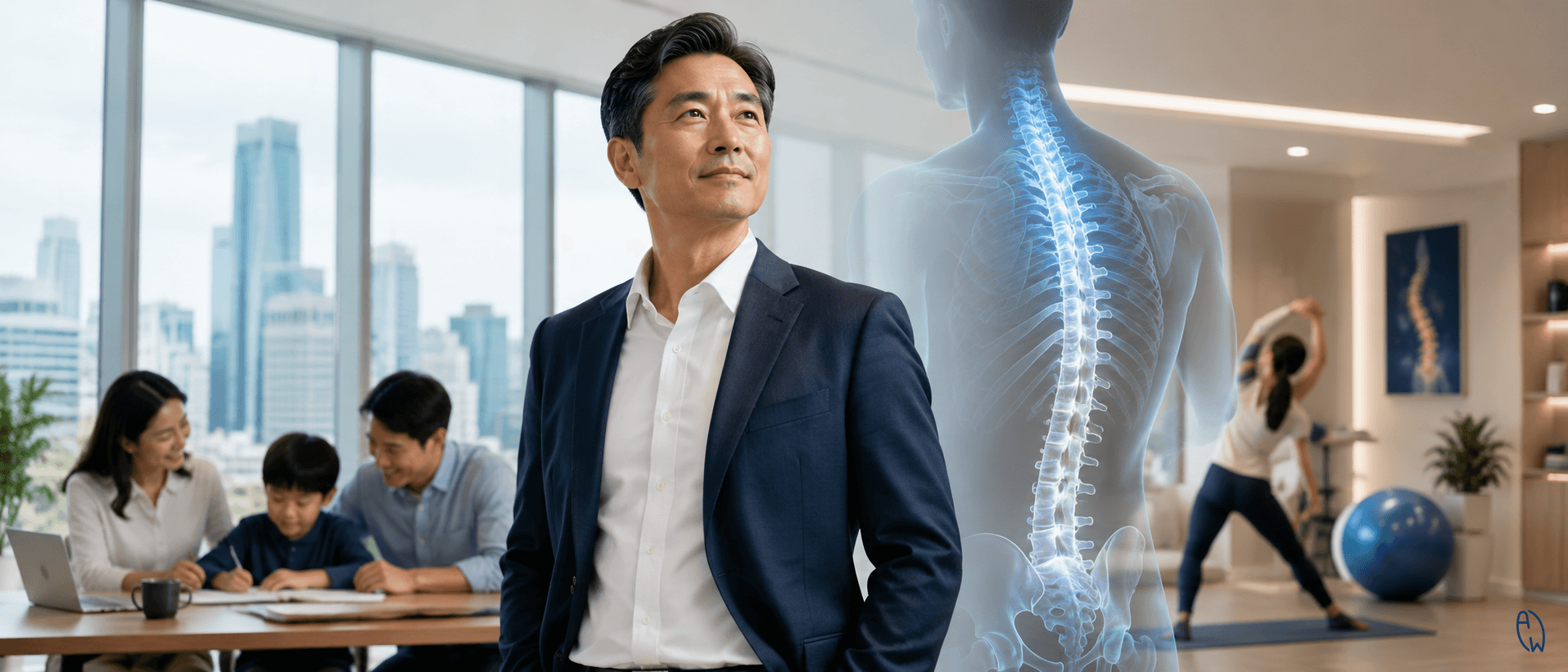
Adult Scoliosis Treatment: Why Taking Care of Your Spine Today Protects Your Future Independence
Understanding Adult Scoliosis
Adult scoliosis is a spinal condition characterized by an abnormal sideways curvature of the spine that develops or progresses during adulthood. While many people associate scoliosis with teenagers, adult scoliosis presents unique challenges that often require a different treatment approach.
Unlike adolescent scoliosis, where the primary goal is often preventing curve progression during growth, adult scoliosis treatment focuses on:
-
Pain management
-
Functional movement
-
Maintaining independence
-
Slowing degenerative changes
-
Preserving spinal mobility
-
Improving quality of life
For many adults, scoliosis becomes increasingly noticeable as age-related changes affect the spine and surrounding structures.
What Causes Symptoms in Adult Scoliosis?
Several factors can contribute to pain, stiffness, and progression in adult scoliosis, including:
-
Degenerative disc disease
-
Spinal arthritis
-
Muscle weakness and imbalance
-
Osteoporosis
-
Reduced flexibility
-
Poor postural habits
-
Sedentary lifestyles
As discs lose height and joints experience wear and tear, the spine may become less stable, causing curves to worsen over time.
Many adults are surprised to learn that the pain they experience may not be caused solely by the spinal curve itself, but by the body's attempt to compensate for the imbalance.
The Reality of Adult Scoliosis in Busy Professionals
At All Well Scoliosis Centre, many of our adult scoliosis patients are highly successful individuals.
They are CEOs.
Business owners.
Corporate executives.
Healthcare professionals.
Busy working parents.
They are often high-performing people who have learned how to push through discomfort.
For years, they prioritize everyone else first.
Their family.
Their children.
Their business.
Their employees.
Their responsibilities.
They use coffee, adrenaline, achievement, and constant activity to mask the warning signs their body has been sending.
Then one day, the body starts demanding attention.
The back pain becomes harder to ignore.
The stiffness lasts longer.
The recovery takes longer.
The energy levels drop.
The body is no longer willing to compensate the way it once did.
Why Many Adults Delay Treatment
One of the most common things we hear is:
"I know I should exercise, but I don't have time."
"I'll start when work settles down."
"I'll focus on myself when the kids are older."
"I'll take care of my health next year."
Unfortunately, the body does not operate according to our schedules.
The spine does not wait until your calendar becomes less busy.
Your muscles do not remain strong simply because you intend to exercise one day.
Your bones do not stop aging because you are focused on building a business or raising a family.
The body has limits.
It can only tolerate stress, poor sleep, inactivity, and poor recovery for so long before symptoms begin to appear.
Your Body Is the Vehicle Carrying You Through Life
Many successful professionals spend years investing in their businesses, careers, homes, and families.
Yet they often neglect the one asset that makes everything else possible: their body.
Your body is the vehicle carrying you through life.
Without regular maintenance, even the most expensive car eventually breaks down.
The same principle applies to your spine.
The longer you postpone caring for your physical health, the more difficult recovery may become later.
By the time life finally slows down, several biological changes may already have occurred:
-
Loss of muscle mass
-
Reduced bone density
-
Decreased mobility
-
Slower tissue recovery
-
Reduced growth hormone production
-
Increased risk of falls and injury
This is why building healthy habits early matters.
Muscle Is One of the Best Investments You Can Make
Many people believe they need hours in the gym to improve their health.
The truth is that consistency matters more than duration.
You do not need three hours every day.
You need a sustainable plan.
Even 30 minutes of intentional movement daily can create significant long-term benefits.
This may include:
-
Scoliosis-specific exercises
-
Pilates-based strengthening
-
Isometric core training
-
Walking
-
Resistance training
-
Breathing exercises
-
Cardiovascular conditioning
Strong muscles help support the spine, improve posture, reduce pain, and maintain independence as we age.
Think of muscle as your retirement fund for physical health.
The earlier you start investing, the greater the returns.
Treatment Options for Adult Scoliosis
Every scoliosis case is unique, and treatment should be individualized based on symptoms, curve severity, age, activity level, and overall health.
Common non-surgical treatment approaches may include:
Scoliosis-Specific Exercise Programs
Targeted exercise programs help improve spinal stability, posture awareness, breathing mechanics, and muscular endurance.
Chiropractic and Conservative Care
Conservative treatment may help improve joint mobility, reduce muscular tension, and support functional movement when combined with exercise.
Core Strengthening and Rehabilitation
A strong core provides better support for the spine and helps reduce unnecessary strain on surrounding structures.
Postural Education
Learning how to sit, stand, lift, and move efficiently throughout the day can reduce repetitive stress on the spine.
Bone Health Management
For adults with osteoporosis or osteopenia, maintaining bone density becomes an important part of scoliosis management.
Why Early Assessment Matters
Many adults assume that scoliosis only needs treatment when pain becomes severe.
This is a common mistake.
Early assessment allows healthcare providers to:
-
Monitor curve progression
-
Identify contributing factors
-
Develop personalized exercise strategies
-
Improve spinal function
-
Reduce future complications
If scoliosis is identified early, physical programs can often be adjusted to better support the spine before significant degeneration occurs.
A Message to Every Busy Parent, Professional, and Business Owner
There will always be another meeting.
Another deadline.
Another school activity.
Another responsibility competing for your attention.
But your body is keeping score.
The choices you make today will influence how you move, function, and live ten, twenty, or thirty years from now.
Do not wait until pain forces you to pay attention.
Do not wait until mobility becomes limited.
Do not wait until your body can no longer compensate.
Give yourself at least 30 minutes out of your 24-hour day.
Move.
Strengthen.
Walk.
Breathe.
Build muscle.
Protect your spine.
The goal is not simply to live longer.
The goal is to remain strong, independent, and capable of enjoying the life you worked so hard to build.
If you have symptoms of scoliosis, persistent back pain, postural changes, or concerns about spinal health, seek an assessment early. Early intervention gives you more options and a greater opportunity to maintain an active and independent future.