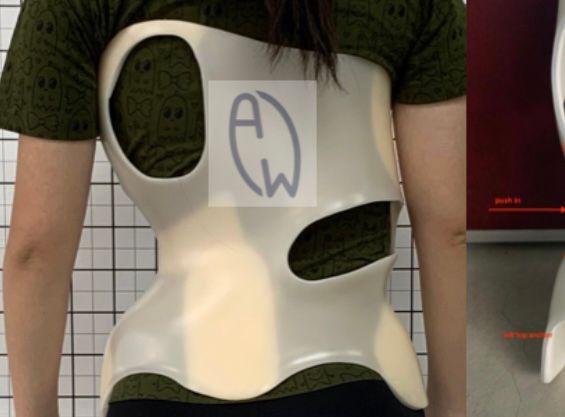
Scoliosis Bracing: Traditional vs 3-Dimensional Bracing
The Role of Bracing in Scoliosis Treatment
Bracing is a key non-surgical treatment, especially for children and adolescents still growing. It helps:
-
Prevent further curvature
-
Support proper posture
-
Reduce the need for surgery
Limitations of Traditional Bracing
Conventional braces such as the Boston, Milwaukee, or Charleston braces were developed in the 1970s and primarily treat scoliosis in two dimensions.
Common issues include:
-
Poor fit
-
Discomfort and emotional stress
-
Reduced spinal strength and flexibility
-
Inadequate correction of spinal rotation
-
Potential worsening of rib cage deformity
Holding a rotated spine in place without correcting rotation can lead to long-term structural problems.
3-Dimensional ScoliBrace™ at All Well Scoliosis Centre
At All Well Scoliosis Centre, we adopt the ScoliBrace™ asymmetric 3-dimensional bracing system, which:
-
Is fully customised for each individual
-
Addresses spinal rotation, lateral bending, and posture simultaneously
-
Uses an over-corrective design to retrain spinal alignment
Scoliosis is a 3-dimensional condition, and effective bracing must treat it as such.
When combined with specific scoliosis exercises (CLEAR, Schroth, or SEAS), patients often experience:
-
Significant improvement in posture
-
Better balance and coordination
-
Long-term curve reduction and stability
Parent FAQ: Scoliosis, Posture, and Bracing
Q1: How can I tell if my child has scoliosis?
Look for uneven shoulders, head tilt, uneven hips, or a rib hump when bending forward. A professional postural assessment is essential for accurate diagnosis.
Q2: Are X-rays safe for children?
Yes. Modern scoliosis X-rays use low-dose radiation. They are necessary to accurately measure the curvature and rotation of the spine.
Q3: Will bracing hurt my child?
Properly fitted 3D braces like ScoliBrace™ are comfortable and designed for long-term wear. They allow mobility while correcting the spine.
Q4: Can adults wear braces too?
Yes. While bracing is most effective during growth, adults can benefit from custom 3D bracing combined with exercises to improve posture and reduce pain.
Q5: How does posture affect scoliosis progression?
Poor posture can worsen spinal rotation over time. Correcting posture with exercises and bracing helps stabilize the spine and prevent progression.