The Connection Between Bunions and Flat Feet: Why Your Foot Structure Matters
Bunions and Flat Feet Often Come Together
Many people think bunions are simply caused by wearing tight shoes. While footwear can make symptoms worse, research shows that bunions — also known as hallux valgus — are usually driven by a combination of genetics, foot structure, and long-term loading patterns.
One of the most common structural contributors is flat feet.
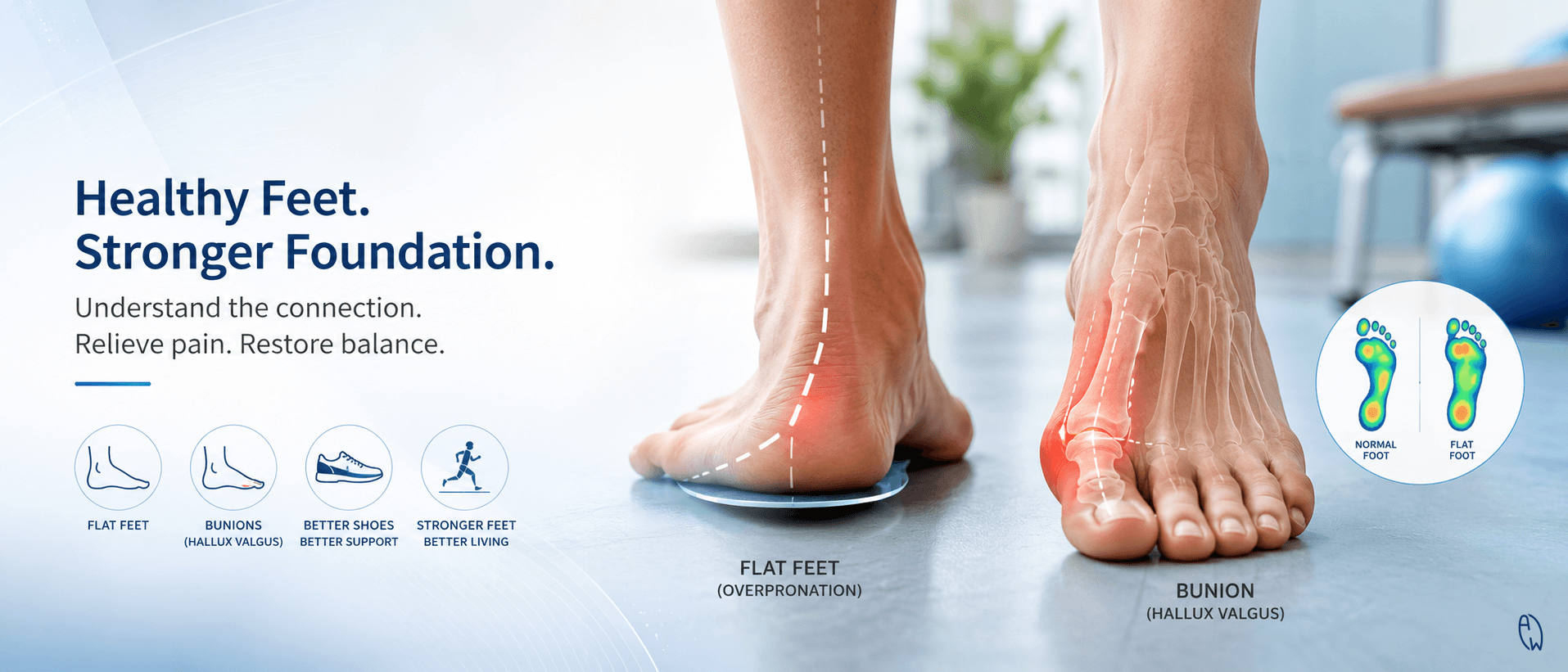
If you have flat feet, your arches may collapse excessively during walking and standing. This changes how force travels through the foot and can place extra stress on the big toe joint over time. As pressure increases, the big toe may gradually drift inward toward the second toe, creating the classic bunion appearance.
Understanding the connection between bunions and flat feet is important because treating only the bunion without addressing foot mechanics often leads to recurring pain and poor long-term results.
What Is a Bunion (Hallux Valgus)?
A bunion is a progressive foot deformity where the big toe shifts toward the smaller toes while the joint at the base of the toe becomes more prominent.
Common symptoms include:
-
Pain around the big toe joint
-
Swelling and redness
-
Difficulty wearing certain shoes
-
Foot fatigue after standing or walking
-
Reduced balance and push-off strength
-
Toe crowding or overlapping toes
Hallux valgus develops gradually and is often linked to instability in the foot structure.
How Flat Feet Contribute to Bunions
Flat feet, also called fallen arches, affect how the foot absorbs and distributes force.
When the arch collapses excessively:
-
The foot tends to roll inward (overpronation)
-
The first metatarsal becomes unstable
-
The big toe joint experiences increased sideways stress
-
Muscles supporting the arch weaken over time
-
Pressure shifts unevenly across the forefoot
Over months and years, these changes may contribute to bunion formation and worsening alignment.
People with flat feet may also notice:
-
Heel pain
-
Shin discomfort
-
Knee strain
-
Poor walking mechanics
-
Faster foot fatigue
This is why bunions are rarely just a “toe problem.” They are often connected to the overall mechanics of the foot and lower limb.
Why Quick Fixes Usually Do Not Work
Hallux valgus is driven by a mix of genetics, foot structure, and long-term loading. This is why no single treatment works on its own.
Many people try:
-
Stretching only
-
Massage tools
-
Toe cracking
-
Temporary padding
-
Rest without strengthening
These may provide short-term relief but often fail to address the deeper mechanical contributors.
The research is increasingly clear: the best non-operative outcomes usually come from combining multiple strategies together rather than chasing quick fixes.
Non-Surgical Strategies That May Help
1. Wide Toe Box Shoes
Shoes with a wider toe box reduce compression on the forefoot and allow the toes to spread more naturally.
Narrow footwear may increase pressure on the bunion and worsen irritation over time.
Look for shoes that:
-
Allow natural toe splay
-
Reduce squeezing at the forefoot
-
Provide stable support underneath the arch
2. Toe Separators and Orthotics
Toe separators may help improve toe positioning temporarily and reduce friction between the toes.
Orthotics can also help redistribute pressure and improve foot mechanics, especially in individuals with flat feet or excessive pronation.
Together, they may:
-
Reduce strain on the big toe joint
-
Improve walking comfort
-
Support arch stability
-
Decrease overload during standing and walking
3. Strengthening the Foot Muscles
One of the most overlooked treatments for bunions and flat feet is strengthening the intrinsic foot muscles.
These small stabilizing muscles help support:
-
The arch
-
Toe control
-
Balance
-
Foot alignment
Exercises may include:
-
Short foot exercises
-
Toe spreading drills
-
Calf strengthening
-
Balance training
-
Controlled arch activation
Improving foot strength may help create better long-term support and reduce excessive collapse during movement.
4. Taping and External Support
Taping techniques or external support braces may help guide foot positioning and reduce stress on irritated tissues.
When combined with strengthening and proper footwear, taping may:
-
Improve comfort during walking
-
Enhance foot awareness
-
Reduce overload on the bunion region
-
Support temporary alignment correction
Can Bunions Be Reversed Naturally?
Severe bunions usually cannot be fully reversed without surgery. However, many people can improve:
-
Pain levels
-
Walking comfort
-
Foot function
-
Balance
-
Toe mobility
-
Daily activity tolerance
Some individuals may even experience small alignment improvements over time with consistent conservative care.
The key is focusing on long-term foot mechanics rather than searching for overnight correction.
The Bigger Picture: Treat the Whole Foot
Bunions and flat feet are closely connected because the foot functions as one entire system.
If the arch lacks support and stability, the forefoot often compensates. Over time, this may contribute to changes in toe alignment, walking mechanics, and joint loading.
A comprehensive approach that combines:
-
Proper footwear
-
Pressure management
-
Foot strengthening
-
Alignment support
-
Movement retraining
typically provides the best chance for long-term improvement.
When Should You Seek Professional Help?
You should consider professional assessment if you experience:
-
Persistent bunion pain
-
Difficulty walking
-
Rapid worsening of toe alignment
-
Foot fatigue during daily activities
-
Balance problems
-
Recurrent ankle or knee discomfort
-
Pain that affects exercise or work
Early intervention may help slow progression and improve overall foot function before symptoms become more severe.
Final Thoughts
Bunions are not simply caused by shoes alone. Flat feet, poor foot mechanics, genetics, and long-term loading patterns all play a role in how hallux valgus develops.
The most effective non-surgical approach is usually not a single treatment — but a combination of strategies working together over time.
Wide toe box shoes, toe separators, orthotics, strengthening exercises, and external support may all help improve comfort, function, and foot stability when used consistently.
Instead of chasing quick fixes, focus on building stronger and more resilient foot mechanics for long-term results.