Patient Inquiry
“I’ve had a protruding tailbone for as long as I can remember. It causes discomfort during certain movements and makes me feel self-conscious, especially when wearing fitted clothing.
Sitting for extended periods or putting pressure on the area can lead to pain or numbness, and exercises like sit-ups are difficult. I’ve also been told I have posture issues and a possible pelvic tilt.
I don’t recall any major injuries, but I did have a fall as a child that may be related.
I’m looking for guidance—what could be causing this? Is it common? Do I need surgery, or are there non-invasive treatments that can help? This has started to affect my daily life physically and emotionally.” - a 26 yr old 5’5 Female in Singapore
Protruding Tailbone Pain: Causes, Posture Links, and Non-Surgical Treatment Options
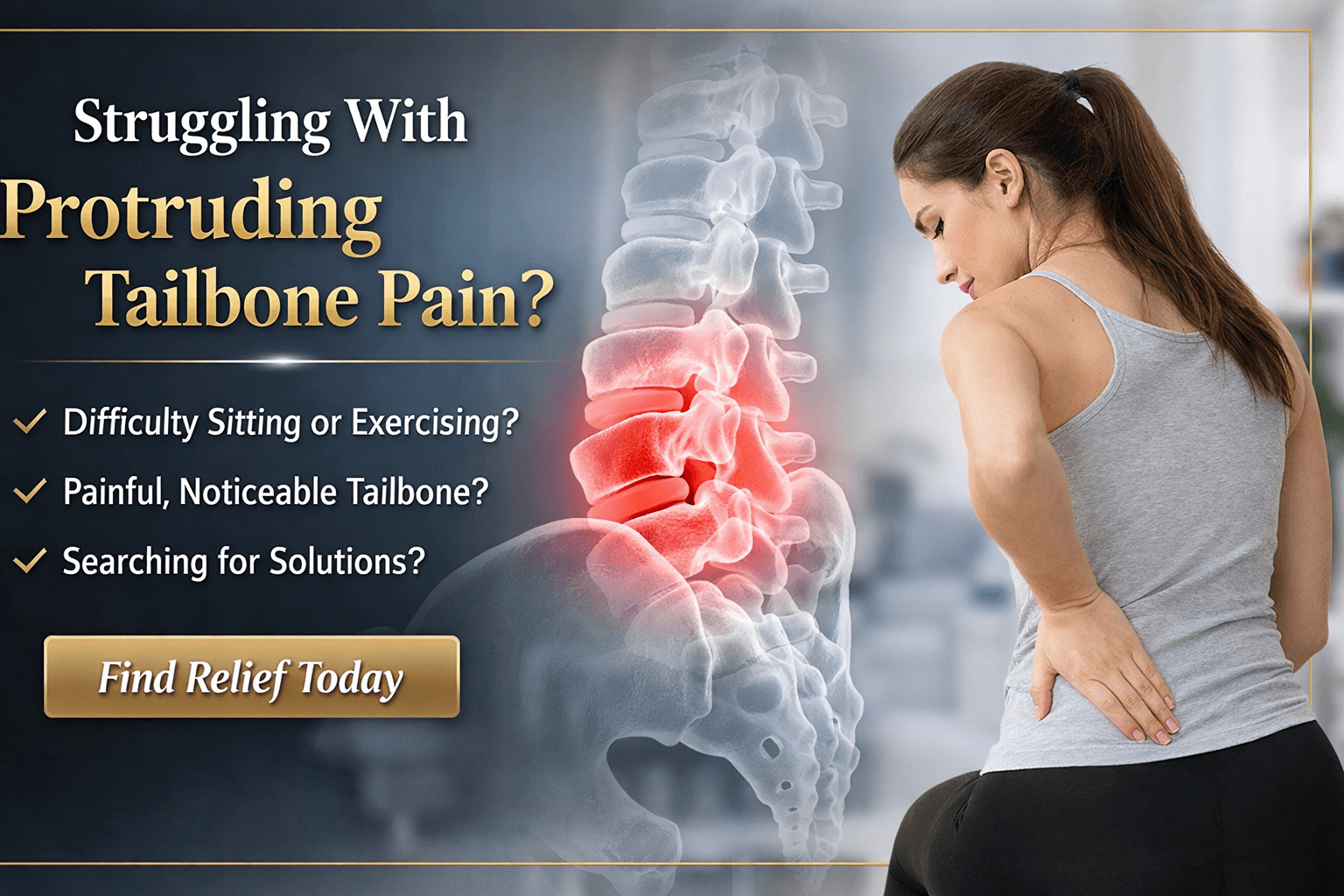
A protruding tailbone can be uncomfortable, painful, and emotionally distressing—especially when it begins to interfere with daily activities like sitting, exercising, or even resting.
Many people assume it is purely a structural or cosmetic issue. In reality, tailbone pain is often a sign of deeper imbalances within the spine and pelvis.
What Is a Protruding Tailbone?
The tailbone (coccyx) is the final segment of the spinal column. Despite its small size, it plays an important role in:
-
Supporting your body when seated
-
Anchoring muscles and ligaments
-
Maintaining balance within the pelvis
When the coccyx becomes misaligned, inflamed, or more prominent—especially in individuals with less natural cushioning—it can lead to persistent discomfort known as coccydynia.
Common Causes of Tailbone Pain and Misalignment
1. Past Trauma (Even If You Don’t Remember Clearly)
Falls onto the buttocks—especially during childhood—can create subtle shifts in the coccyx that worsen over time.
2. Prolonged Sitting
Long hours sitting, particularly on hard surfaces, place repeated pressure on the tailbone.
3. Pelvic Tilt and Imbalance
A tilted pelvis changes how your body distributes weight, often increasing stress on the coccyx.
4. Poor Posture
Slouching or improper spinal alignment shifts load downward, directly affecting the tailbone.
5. Repetitive Strain
Activities such as cycling, rowing, or frequent core exercises can irritate the area.
6. Body Composition
-
Lower body fat → less cushioning over the coccyx
-
Higher body weight → increased pressure on the structure
Why Tailbone Pain Should Never Be Treated in Isolation
One of the most important clinical truths is this:
The tailbone is part of a larger spinal system—not a standalone problem.
Nerves travel from the top of the spine all the way down to the coccyx. This means:
-
Issues in the lumbar spine (L1–L5) can influence tailbone pain
-
Disc problems or compression may refer symptoms downward
-
Nerve irritation can lead to numbness or radiating discomfort
Some patients even experience symptoms similar to sciatica, where discomfort extends beyond the tailbone.
Focusing only on the painful area often leads to temporary relief rather than long-term resolution.
Symptoms to Watch For
-
Pain when sitting or leaning back
-
Visible or noticeable protrusion
-
Numbness or sensitivity in the tailbone area
-
Pain during exercises such as sit-ups
-
Difficulty transitioning from sitting to standing
-
Ongoing discomfort affecting daily function
Is Surgery Necessary?
In most cases, surgery is not required.
Surgical removal of the coccyx is typically considered only when:
-
Pain is severe and long-standing
-
Conservative care has failed
-
Structural damage is clearly confirmed
Because surgery is invasive and recovery can be lengthy, it should always be the last option—not the first.
Effective Non-Surgical Treatment Approaches
1. Full Spine and Pelvic Assessment
Understanding the alignment of the entire spine is essential to identifying the root cause.
2. Chiropractic Care
Targeted adjustments can help:
-
Restore spinal alignment
-
Reduce nerve irritation
-
Improve pelvic balance
3. Rehabilitation and Strength Work
Structured exercises support:
-
Core stability
-
Postural correction
-
Reduced stress on the coccyx
4. Postural Awareness
Daily habits—how you sit, stand, and move—play a critical role in recovery.
5. Activity Modification
Reducing movements that aggravate the tailbone allows healing to begin.
6. Sitting Support
Using proper cushioning can significantly reduce pressure during recovery.
The Reality of Pain Progression
Pain rarely appears suddenly without reason.
The body accumulates stress, imbalance, and dysfunction over time. Most people:
-
Ignore early warning signs
-
Continue with poor posture or movement patterns
-
Seek help only when pain disrupts normal life
At that stage, recovery often takes longer and requires a more comprehensive approach.
Final Perspective: Address the Root Cause, Not Just the Pain
A protruding or painful tailbone is often not the primary issue—it is a symptom of deeper structural imbalance.
The spine functions as one connected system, from the neck down to the coccyx. Real recovery begins when treatment focuses on the entire structure, not just the area of discomfort.
Early intervention, proper assessment, and consistent care can significantly improve both function and quality of life.
Medical Disclaimer
This article is for educational purposes only and does not constitute medical advice.
Scoliosis varies significantly between individuals. Always consult a qualified healthcare professional before starting any new sport or exercise program, especially if you have scoliosis, spinal conditions, pain, or previous injuries. Participation in sports should be guided by individual assessment and professional recommendation.
The image is shared for educational purposes with patient consent. Individual outcomes vary. Structural correction does not automatically restore full respiratory function. Clinical assessment is required.
Copyright & Content Protection Notice
© 2026 All Well Scoliosis Centre. All rights reserved.
This content is original and protected by copyright law.
No part of this article may be reproduced, distributed, copied, or reused in any form without prior written permission. Unauthorized use, duplication, or content scraping is strictly prohibited.