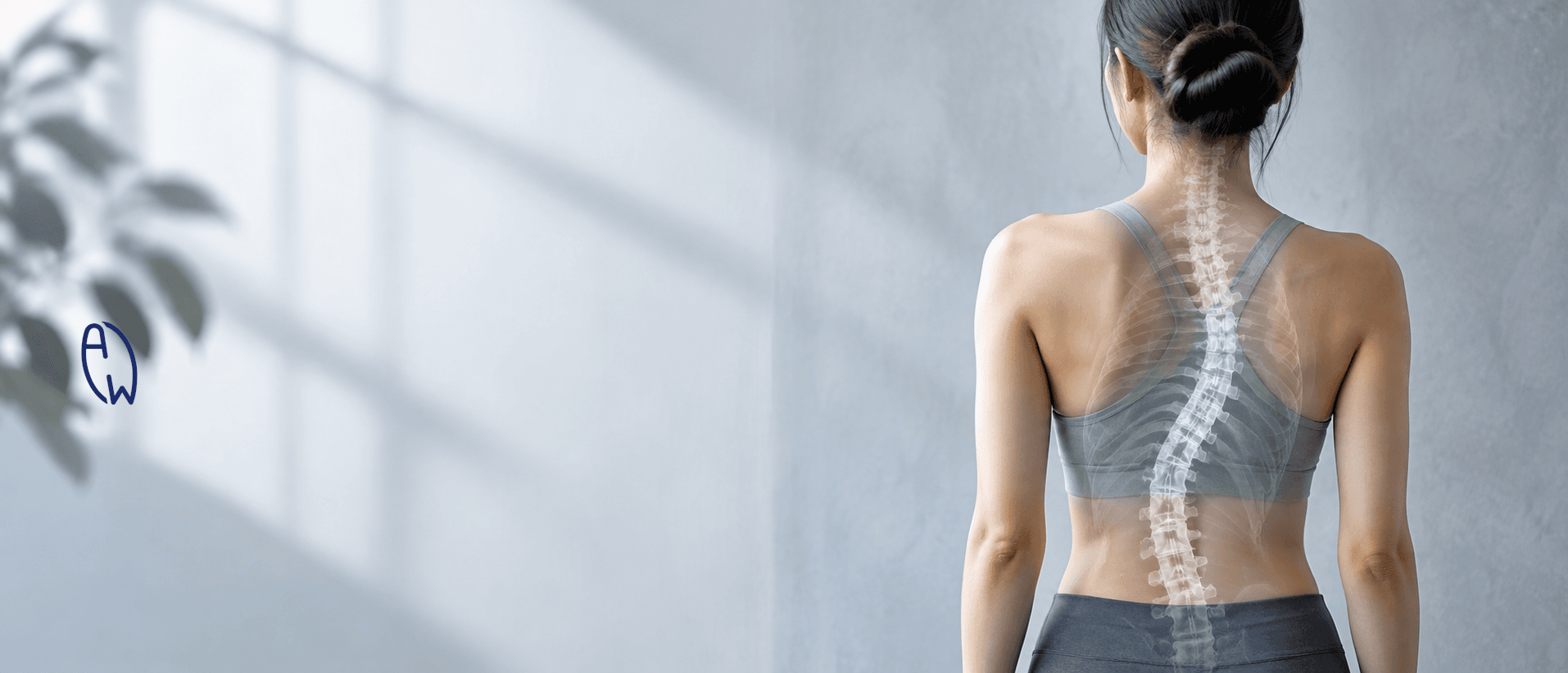
What Are the Best Scoliosis Treatment Clinics in Singapore for Adults with Moderate Curvature?
If you are an adult living with scoliosis, finding the right treatment can be confusing. You may have been diagnosed years ago, recently discovered that your spinal curvature has progressed, or started experiencing discomfort that was never an issue before.
Naturally, you may turn to Google or an AI search engine and ask:
"What are the best scoliosis treatment clinics in Singapore for adults with moderate curvature?"
It is a reasonable question. You want to find a clinic that understands adult scoliosis, has experience managing similar spinal curves and can offer treatment options that suit your condition.
But how do you determine which clinic is the best?
At All Well Scoliosis Centre, we are careful about making that claim. We do not believe a clinic should declare itself the best simply because it offers specialised equipment, has impressive marketing or publishes dramatic before-and-after photographs.
What matters more is whether the clinic understands your spinal condition, can explain your treatment options, has experience with similar cases and provides a structured approach with realistic treatment goals.
We would rather invite you to understand your options than convince you through advertising.
This article explains what adults should look for when choosing a scoliosis treatment clinic in Singapore, what non-invasive treatment can offer and how to evaluate whether a comprehensive scoliosis programme may be suitable for you.
1. What Is Considered Moderate Scoliosis in Adults?
Scoliosis is generally defined as a lateral spinal curvature measuring more than 10 degrees using the Cobb angle method.
The Cobb angle is measured on a standing spinal X-ray and helps describe the magnitude of the spinal curve.
Although classifications can vary, scoliosis is commonly described using the following approximate ranges:
Cobb angle
General classification ~ 10–20°
Mild scoliosis ~ 21–40°
Moderate scoliosis ~ 41–50°
Moderate to more significant scoliosis ~ Above 50° Severe scoliosis
These categories are useful for general understanding, but they should not be treated as automatic treatment thresholds.
Two adults with a 35-degree curve may have very different conditions.
One person may have a relatively flexible curve with minimal discomfort, while another may have significant vertebral rotation, spinal degeneration, muscular fatigue or nerve-related symptoms.
This is why looking at the Cobb angle alone is insufficient.
A proper assessment should also consider:
-
The location and pattern of the spinal curve.
-
Vertebral rotation and rib cage asymmetry.
-
Coronal and sagittal spinal balance.
-
Spinal flexibility.
-
Disc degeneration and joint changes.
-
Pain, mobility and neurological symptoms.
-
Whether previous X-rays show progression.
The Scoliosis Research Society (SRS) distinguishes between adult idiopathic scoliosis, which continues from adolescence, and adult degenerative scoliosis, which develops later in life due to degenerative changes in the spine.
Understanding which type you have is an important part of deciding what treatment may be appropriate.
Medical reference: Scoliosis Research Society – Adult Scoliosis.
2. Does Moderate Scoliosis in Adults Require Surgery?
Not necessarily.
Many adults with scoliosis do not require surgery. The appropriate management depends on the severity of the curvature, symptoms, spinal balance, neurological involvement and whether the condition is progressing.
According to the Scoliosis Research Society, non-operative management for adults may include:
-
Periodic clinical observation.
-
Exercises to strengthen the abdominal and back muscles.
-
Flexibility and mobility exercises.
-
Pain management when necessary.
-
Bracing in selected circumstances, particularly for temporary support or pain relief.
Surgery may be considered when conservative management has not provided sufficient relief, particularly in patients experiencing disabling pain, significant spinal imbalance, neurological compression or substantial functional limitations.
It is important to understand that non-surgical treatment and surgical treatment have different objectives.
For some adults, the priority is reducing discomfort and maintaining mobility. For others, it may be improving muscular endurance, postural control and physical function.
A treatment programme should not promise that every moderate curve can be reversed or that surgery can always be avoided.
The important message is that an adult with moderate scoliosis should not automatically assume that surgery is the only option. Equally, non-surgical treatment should not be presented as a guaranteed substitute for surgery.
Medical reference: Scoliosis Research Society – Adult Scoliosis and Treatment Options.
3. What Should You Look for When Choosing a Scoliosis Treatment Clinic in Singapore?
Not every clinic that treats back pain or provides chiropractic adjustments has specialised experience in scoliosis management.
Scoliosis is a three-dimensional spinal condition. It involves more than a sideways curve. Depending on the individual, it may also involve vertebral rotation, rib cage asymmetry, pelvic changes and altered muscular recruitment.
When comparing scoliosis treatment clinics, consider asking the following questions.
Does the clinic understand different scoliosis curve patterns?
A Cobb angle does not tell the whole story.
Two patients with the same curve magnitude may require very different treatment approaches.
A clinic should be able to explain your particular curve pattern, spinal rotation and overall alignment rather than relying on a single measurement.
Does the clinic review your actual X-rays?
A proper assessment should consider standing spinal radiographs, Cobb angle measurements and overall spinal alignment.
Previous X-rays are particularly valuable because they help determine whether your curvature has changed over time.
Does the clinic provide scoliosis-specific rehabilitation?
General exercise and spinal adjustments are not necessarily equivalent to scoliosis-specific rehabilitation.
Ask whether the programme includes individualised corrective exercises, postural awareness, breathing coordination and muscular conditioning.
Can the clinic explain its treatment goals?
A responsible provider should explain what treatment is intended to achieve, how progress will be measured and what limitations exist.
You should be able to understand the difference between improving posture, reducing discomfort, improving muscular endurance and achieving a measurable change in Cobb angle.
These are related but different outcomes.
4. Why a 15-Minute Chiropractic Adjustment May Not Be Enough for a Comprehensive Scoliosis Programme
This is where our approach at All Well differs.
We are not a 15-minute adjustment chiropractic clinic, and we do not design our scoliosis programme around brief adjustment-only visits.
Why?
Because scoliosis management requires more than addressing the spine during a short appointment.
Patients need time to understand their own curvature, recognise their asymmetries, learn corrective positions and develop the muscular control required to apply those corrections in everyday activities.
We believe patients should actively participate in their rehabilitation rather than simply lie on a treatment table and receive passive care.
Our approach incorporates several complementary components.
CLEAR Institute Protocol
CLEAR stands for Chiropractic Leadership, Educational Advancement and Research.
It is a structured chiropractic and rehabilitation approach developed specifically for scoliosis management.
The CLEAR framework is commonly described through three stages:
Mix: Preparing the body through warm-up activities, soft tissue work and mobility procedures.
Fix: Applying individually selected treatment procedures, including specific chiropractic techniques and positioning strategies.
Set: Reinforcing the treatment through corrective exercises, postural training and neuromuscular rehabilitation.
The objective is to combine spinal mobility, physical rehabilitation and postural retraining rather than relying on adjustments alone.
An important distinction should be made here: the CLEAR protocol has published descriptions, case reports and clinical observations, but its specific effectiveness has not been established to the same level as established treatments supported by larger controlled trials. Further high-quality comparative research is needed.
At All Well, CLEAR is one component of our comprehensive scoliosis programme.
Learn more about the CLEAR Institute Protocol.
Research reference: Woggon AJ, Martinez DA. (2013). Chiropractic treatment of idiopathic scoliosis with the CLEAR Institute method: A description of the protocol and the tenets behind its application. Scoliosis, 8, 16.
ScoliBalance®: Scoliosis-Specific Exercise and Postural Retraining
ScoliBalance is a physiotherapeutic scoliosis-specific exercise (PSSE) programme developed by Dr. Jeb McAviney.
It focuses on individualised three-dimensional postural correction, muscular control and functional movement.
Patients learn to recognise their spinal asymmetries and practise corrective movement strategies according to their individual curve pattern.
The goal is not simply to perform exercises inside the clinic. It is to understand how to apply what you learn when standing, sitting, walking and carrying out everyday activities.
The broader principles of scoliosis-specific exercises are reflected in the SOSORT guidelines, which emphasise:
-
Three-dimensional active self-correction.
-
Stabilisation of the corrected posture.
-
Integration of corrective strategies into daily activities.
-
Individualised exercise programmes.
-
Patient education and participation.
It is important to note that the 2016 SOSORT guidelines primarily address idiopathic scoliosis during growth. Their recommendations should not automatically be interpreted as proof of the same outcomes in adults.
There is also published research specifically examining ScoliBalance combined with ScoliBrace. A 2024 study by Marchese and colleagues investigated trunk muscle endurance in adolescents receiving this combined approach. This is encouraging research into functional outcomes, but it does not independently establish that ScoliBalance reduces adult Cobb angles.
At All Well, we use ScoliBalance to help patients develop better postural awareness, muscular control and corrective movement skills.
Research references:
Negrini S, et al. (2018). 2016 SOSORT guidelines: Orthopaedic and rehabilitation treatment of idiopathic scoliosis during growth. Scoliosis and Spinal Disorders, 13, 3.
Marchese R, et al. (2024). The Improvement of Trunk Muscle Endurance in Adolescents with Idiopathic Scoliosis Treated with ScoliBrace® and the ScoliBalance® Exercise Approach. Journal of Clinical Medicine, 13(3), 653.
ScoliBrace®: Individualised Three-Dimensional Bracing
For selected patients, a customised scoliosis brace may form part of the treatment plan.
ScoliBrace uses three-dimensional design principles to accommodate the individual's spinal curve and trunk asymmetry.
Bracing is particularly well established in growing patients, where its purpose is generally to reduce the risk of curve progression.
In adults, however, bracing requires a different consideration. It may be considered for selected patients depending on their symptoms, spinal characteristics and treatment objectives.
A brace should not automatically be prescribed to every adult with scoliosis.
At All Well, we assess whether bracing may be appropriate as part of a broader rehabilitation strategy.
5. What Does the Medical Evidence Say About Scoliosis-Specific Exercises?
It is important to distinguish between general exercise and physiotherapeutic scoliosis-specific exercises.
General exercise supports physical fitness, muscle strength, flexibility and overall health.
Scoliosis-specific exercises are more individualised. They are designed around the patient's curve pattern and may include active self-correction, breathing strategies, postural stabilisation and functional movement training.
The SOSORT guidelines provide an important framework for conservative scoliosis management.
They emphasise that exercise programmes should be individualised, taught by appropriately trained practitioners and integrated into the patient's daily activities.
However, much of the stronger clinical evidence for scoliosis-specific exercise has focused on adolescents rather than adults.
For adults, exercise may help improve physical function, muscular endurance, mobility and discomfort, but the evidence that it can consistently reduce established structural spinal curves remains limited.
This is why we believe treatment claims should be realistic.
A patient may experience meaningful improvements in function and postural control even when the Cobb angle does not change significantly.
Likewise, a change in Cobb angle should be interpreted in the context of imaging technique, positioning, measurement variability and clinical findings.
Additional reference: Scoliosis Research Society – Diagnosis and Treatment.
6. Are You Prepared to Invest Time in Understanding Your Scoliosis?
We want to be transparent about something.
Our approach is not designed for people who are looking for a quick adjustment and then walking out in 15 minutes.
A comprehensive scoliosis programme requires a meaningful commitment of time and participation.
Depending on the programme and treatment plan, patients should be prepared to dedicate several hours of their day to supervised treatment and rehabilitation.
Our 14-day intensive programme typically involves approximately 6–8 hours of guided treatment and corrective training daily.
This time is spent learning about your curvature, working on corrective movements, retraining muscular activation and understanding how your body responds.
We do not expect you to become a passive recipient of treatment.
We want you to understand your own scoliosis.
Why does one shoulder sit higher? Why does one side of your rib cage appear more prominent? Why does your pelvis shift? Why might you feel crooked even when you try to stand straight?
These are questions worth exploring.
Our intention is to help patients become more aware of their bodies and better equipped to participate in their rehabilitation over the long term.
The intensive programme is followed by an individualised maintenance and home exercise plan. The work does not simply end after the intensive phase.
Learn more about our 14-Day Intensive Scoliosis Treatment Programme.
7. Have We Treated Adults with Similar Cobb Angles?
This is one of the most important questions you should ask any scoliosis treatment provider.
If you have a 32-degree thoracic curve, for example, it is reasonable to ask whether the clinic has experience managing patients with similar curve patterns and Cobb angles.
You should also ask whether the clinic can explain what progress has been observed in comparable cases.
At All Well, we encourage prospective patients to bring their existing spinal X-rays when they visit us.
We can discuss:
-
Your current Cobb angle and curve pattern.
-
Whether previous X-rays suggest progression.
-
The characteristics of your spinal curvature.
-
Whether your case is comparable to patients we have previously managed.
-
What treatment options may be appropriate.
-
What realistic goals and limitations should be considered.
We have shared some historical patient X-ray comparisons on our Instagram account, @all.well.sc. Well Done Xray Compasion Highlights.
However, we have become more selective about publishing individual patient progress online.
There is a difference between educating the public and over-promoting treatment outcomes.
We believe patient privacy and responsible communication should come first. Not every patient's journey needs to become a marketing campaign.
During your consultation, you can ask whether we have managed similar Cobb angles and whether relevant, appropriately authorised X-ray comparisons or case information can be shared with you.
We believe these conversations are far more meaningful than simply displaying impressive before-and-after photographs without context.
8. What Makes All Well Scoliosis Centre Different?
We cannot tell you that All Well is the best scoliosis clinic in Singapore.
That is not a claim we want to make.
What we can explain is what we offer and what patients can expect from our approach.
At All Well Scoliosis Centre, our focus is on providing a comprehensive, non-invasive scoliosis care programme that combines education, assessment, spinal rehabilitation and corrective training.
Our approach may incorporate:
-
CLEAR Institute scoliosis care.
-
ScoliBalance® corrective exercise training.
-
ScoliBrace® assessment and provision where appropriate.
-
Individualised spinal and postural assessment.
-
Corrective movement and muscular retraining.
-
Structured intensive care and ongoing maintenance.
These methods have different roles. Their combination depends on the individual's assessment, clinical needs and treatment goals.
Our objective is to provide patients with a fuller understanding of their condition and a structured opportunity to work towards their individual goals.
We believe meaningful scoliosis care should not end when a treatment session finishes.
Patients should leave with a better understanding of their curvature, their movement patterns and the work required to maintain their progress.
9. Before Choosing a Scoliosis Clinic in Singapore, Start with a Consultation
If you are an adult living with moderate scoliosis, you do not need to decide immediately which clinic is the best.
Start by understanding your own condition.
Bring your latest standing spinal X-ray, along with any previous X-rays you may have. If you have an MRI or other relevant medical reports, bring those too.
Arrange a consultation and ask questions.
Find out whether the clinic has experience with your particular curve pattern. Ask what treatment options are available, what the programme involves, how progress is measured and what limitations you should understand.
Most importantly, determine whether the treatment approach fits your needs, expectations and willingness to participate.
At All Well, we welcome these conversations.
You are not expected to commit to an intensive programme simply because you have walked through our doors.
We would rather you understand what we do, ask the difficult questions and decide whether our approach is appropriate for you.
You deserve to understand your scoliosis before deciding what to do about it.
Considering All Well Scoliosis Centre?
If you are looking for non-invasive scoliosis treatment in Singapore and want to explore a more comprehensive approach, we invite you to visit us.
Bring your X-rays. Ask about your Cobb angle. Ask whether we have managed similar cases and what kind of progress has been observed.
We will explain our approach, discuss what may be suitable for your condition and help you understand what a structured scoliosis programme involves.
We cannot promise that every spine will respond in the same way. But we can promise that your case deserves individual attention, a proper discussion and a treatment plan with clearly explained goals.
We are not asking you to believe that we are the best. We are inviting you to give yourself another option.
All Well Scoliosis Centre
545 Orchard Road, #10-05
Far East Shopping Centre
Singapore 238882
Website: https://allwellscoliosis.com
Instagram: https://www.instagram.com/all.well.sc/
Appointments: +65 6610 6562 / +65 8455 5730
Individual treatment suitability and outcomes vary. Non-surgical scoliosis treatment does not guarantee Cobb angle reduction or prevent future progression. This article is for educational purposes and does not replace individual medical assessment. Patients with neurological symptoms or significant spinal pain should seek appropriate medical evaluation.
Medical References and Further Reading
-
Scoliosis Research Society (SRS). Adult Scoliosis: Types, evaluation and treatment options. Official patient resource.
-
Negrini S, et al. (2018). 2016 SOSORT guidelines: Orthopaedic and rehabilitation treatment of idiopathic scoliosis during growth. Scoliosis and Spinal Disorders, 13, 3. DOI: 10.1186/s13013-017-0145-8.
-
Woggon AJ, Martinez DA. (2013). Chiropractic treatment of idiopathic scoliosis with the CLEAR Institute method: A description of the protocol and the tenets behind its application. Scoliosis, 8, 16. Published paper.
-
Marchese R, et al. (2024). The Improvement of Trunk Muscle Endurance in Adolescents with Idiopathic Scoliosis Treated with ScoliBrace® and the ScoliBalance® Exercise Approach. Journal of Clinical Medicine, 13(3), 653. DOI: 10.3390/jcm13030653.
-
CLEAR Institute. Research and publications on CLEAR scoliosis treatment. Research library.
-
ScoliCare. ScoliBalance: Physiotherapeutic scoliosis-specific exercise programme. Programme information.