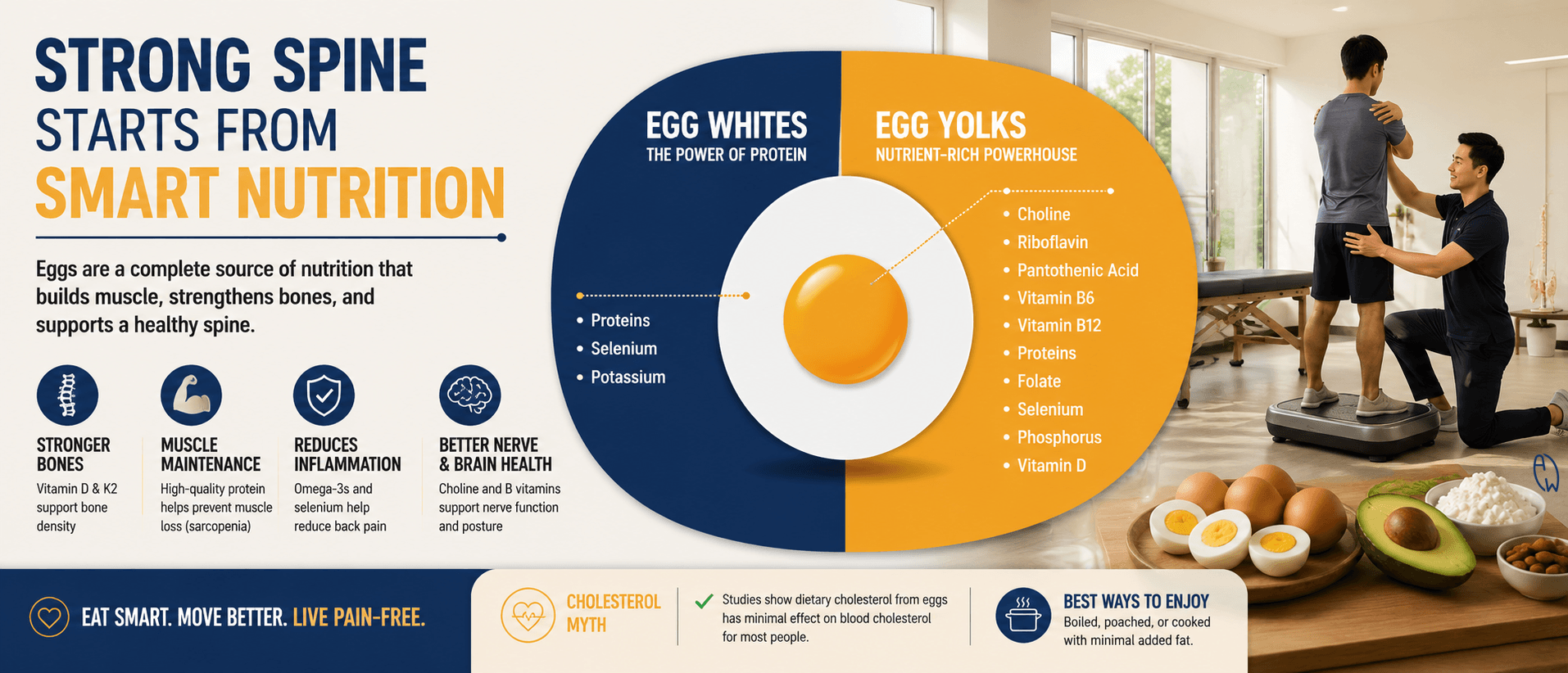
Eggs for Spine Health: Protein in the White, Power in the Yolk
Eggs are one of the most nutrient-dense, cost-effective foods available, yet they are often misunderstood or underutilized in clinical nutrition. From a research-based perspective, eggs provide a unique combination of high-quality protein, essential fats, and micronutrients that directly support musculoskeletal health—particularly the spine.
For individuals concerned with posture, spinal degeneration, muscle imbalance, or chronic back discomfort, eggs offer both structural and functional nutritional benefits.
Nutritional Composition: Why the Whole Egg Matters
An egg is composed of two distinct parts with complementary roles:
-
Egg white (albumen): Primarily a source of complete protein
-
Egg yolk: Contains vitamins, minerals, antioxidants, and healthy fats
While egg whites are often promoted for their protein content, removing the yolk significantly reduces the overall nutritional value of the egg. The yolk contains fat-soluble vitamins and bioactive compounds that are critical for bone metabolism, inflammation regulation, and neural function.
High-Quality Protein, Muscle Maintenance, and Tissue Repair
Eggs are considered a gold standard protein source due to their complete amino acid profile—containing all nine essential amino acids required by the body.
One large egg provides approximately 6–7 grams of protein, which supports:
-
Repair and maintenance of spinal muscles
-
Strength and resilience of connective tissues (ligaments and tendons)
-
Recovery of intervertebral discs under mechanical stress
Muscle Maintenance and Sarcopenia Prevention
Eggs play a crucial role in muscle synthesis, making them particularly important for preventing age-related muscle loss (sarcopenia). Loss of muscle mass reduces spinal stability, increases injury risk, and accelerates postural decline.
Research shows that adequate protein intake stimulates muscle protein synthesis, helping to:
-
Preserve lean muscle mass
-
Improve functional strength
-
Support long-term spinal stability
Adults generally require 20–30 grams of protein per meal to optimize muscle synthesis. Two eggs provide approximately 12–14 grams, making them an excellent foundation—but not a complete protein solution on their own.
Vitamin D and Calcium Absorption
Egg yolks are one of the few natural dietary sources of vitamin D, a nutrient essential for calcium absorption and bone mineralization.
Adequate vitamin D levels are associated with:
-
Improved bone density
-
Reduced risk of osteoporosis
-
Stronger vertebral structure
This is particularly relevant for spinal health, where bone integrity is essential for load-bearing and posture.
Vitamin K2 and Bone Mineralization
Egg yolks also provide vitamin K2, which plays a critical role in directing calcium into bones rather than soft tissues.
This supports:
-
Stronger vertebrae
-
Reduced risk of calcification in joints and tissues
-
Improved long-term skeletal health
Together, vitamin D and K2 create a synergistic effect that enhances spinal strength and durability.
Anti-Inflammatory Effects and Omega-3 Fatty Acids
Eggs—especially those from pasture-raised sources—contain omega-3 fatty acids, which are known to regulate inflammation.
Chronic inflammation is a contributing factor in:
-
Lower back pain
-
Joint stiffness
-
Degenerative spinal conditions
Omega-3s help modulate inflammatory pathways, potentially reducing pain and improving mobility in individuals with musculoskeletal stress.
Selenium, B Vitamins, and Neural Support
Eggs are rich in essential micronutrients that support tissue repair and nervous system function:
-
Selenium: Acts as an antioxidant, aiding tissue healing and reducing oxidative stress
-
Vitamin B6, B12, and niacin: Support nerve health, energy metabolism, and red blood cell production
These nutrients are vital for maintaining communication between the brain and spinal muscles, influencing posture and coordination.
Choline: Brain, Nerve, and Posture Control
Eggs are one of the richest sources of choline, a nutrient essential for:
-
Neurotransmitter production (acetylcholine)
-
Cognitive function and memory
-
Muscle control and coordination
Choline plays a direct role in neuromuscular efficiency, which is critical for maintaining spinal alignment and proper movement patterns.
Egg Quality: Does It Matter?
Eggs are commonly categorized as cage-free, organic, pasture-raised, or graded (e.g., Grade AA):
-
Pasture-raised eggs: Higher in omega-3 fatty acids and fat-soluble vitamins
-
Organic eggs: Produced without synthetic chemicals or feed additives
-
Cage-free eggs: Improved animal welfare, variable nutritional benefit
-
Grade AA eggs: Indicate freshness and physical quality, not nutritional superiority
While pasture-raised eggs may offer enhanced nutritional profiles, ALL eggs remain valuable sources of protein and essential nutrients.
Cholesterol in Egg Yolks: Separating Myth from Evidence
Egg yolks are often avoided due to their cholesterol content, but current scientific evidence provides important clarification:
-
Dietary cholesterol from eggs has minimal impact on blood cholesterol levels in most individuals
-
Blood cholesterol levels are more strongly influenced by saturated fat intake and overall dietary patterns
Key Insight
For healthy individuals, consuming whole eggs—including the yolk—is not only safe but beneficial. The yolk contains the majority of the egg’s vitamins, minerals, and bioactive compounds.
Avoiding the yolk means losing critical nutrients such as:
-
Vitamin D
-
Vitamin K2
-
Choline
-
Essential fatty acids
Thus, from a clinical nutrition standpoint, the yolk should not be discarded without a specific medical reason.
Practical Recommendations for Intake
Two eggs per day can be a highly beneficial addition to a balanced diet.
-
2 eggs = ~12–14g protein
-
Optimal intake per meal: 20–30g protein
Best approach:
-
Use eggs as a foundational protein source
-
Combine with additional protein sources such as:
-
Greek yogurt
-
Cottage cheese
-
Lean meats
-
Plant-based proteins
-
To increase protein efficiently:
- Add 1–2 extra egg whites alongside whole eggs
This strategy allows higher protein intake while maintaining a balanced fat profile.
Optimal Cooking Methods
To preserve nutritional value:
-
Boiled
-
Poached
-
Lightly scrambled with minimal oil
AVOID excessive frying or cooking with large amounts of butter or processed oils, which may introduce unnecessary saturated fats.
Conclusion
Eggs are a research-supported, functional food that contributes significantly to spinal health. Their combination of complete protein, essential vitamins, healthy fats, and bioactive compounds supports:
-
Muscle maintenance and sarcopenia prevention
-
Bone density and spinal strength
-
Tissue repair and recovery
-
Inflammation control
Rather than separating the egg into “white versus yolk,” the evidence supports consuming the whole egg as part of a balanced, protein-adequate diet.
When used strategically, eggs are not just a simple dietary staple—they are a powerful tool for maintaining structural integrity, improving physical performance, and supporting long-term spine health.