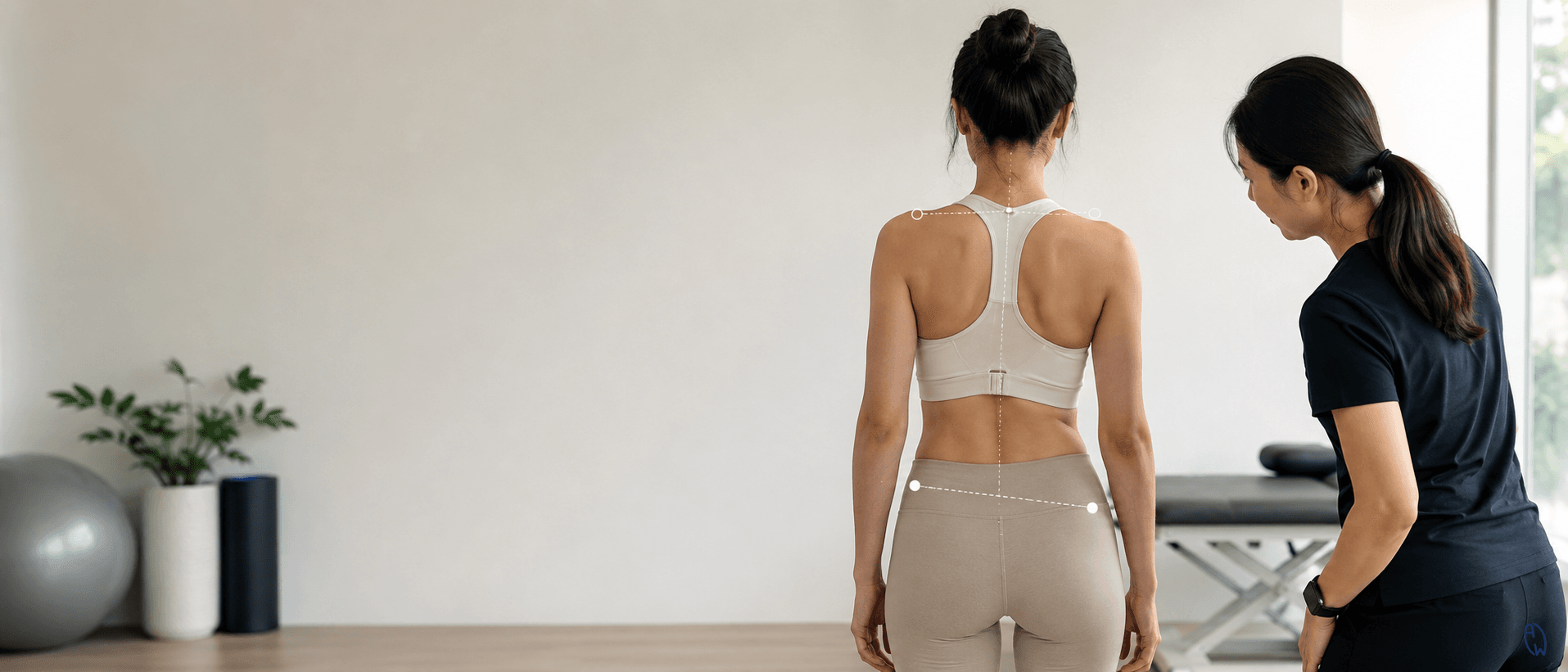
Understanding Pelvic Imbalance: Why Your Hips Keep Going “Out”
Many people feel temporary relief after getting their hips or pelvis “readjusted.”
They may feel straighter, looser, or less painful for a short period of time… only to find themselves returning to the same imbalance again and again.
Why does this happen?
Because in many cases, the issue is not simply that the pelvis is “out.”
The real issue is that the body is still using the same movement strategy that pulled it there in the first place.
True pelvic correction is not just about changing position temporarily.
It is about restoring muscular balance, movement control, stability, and understanding the structure of your body as a whole.
What Is Pelvic Imbalance?
Pelvic imbalance happens when one side of the pelvis sits differently compared to the other side.
This may include:
-
One hip appearing higher
-
One side rotating forward
-
Uneven weight distribution
-
Side-to-side trunk shifting
-
Ribcage compression on one side
-
Lower back tension
-
Hip tightness or instability
These patterns are commonly influenced by:
-
Weak glute medius muscles
-
Front-of-hip dominance
-
Poor femur control
-
Weak deep core stabilization
-
Limited mobility
-
Poor movement mechanics
-
Asymmetrical loading patterns
Over time, the body adapts to these imbalances and begins to rely on compensation patterns to create stability.
That is why simply “putting the pelvis back” often does not create lasting change.
You May Also Have Scoliosis
Often pelvic imbalance is not only muscular. Hip-Spine Connection: Research shows that scoliosis can be related to restricted right hip adduction and internal rotation, potentially influenced by prenatal positioning.
In some individuals, scoliosis or spinal asymmetry may also contribute to:
-
Uneven hips
-
Rib compression
-
Rotational posture changes
-
Chronic muscle tightness
-
One-sided loading patterns
-
Persistent imbalance despite treatment
This is why getting a proper assessment and X-ray imaging can be extremely important.
An X-ray helps us see the full picture:
-
Spinal alignment
-
Pelvic positioning
-
Ribcage rotation
-
Structural asymmetry
-
Load distribution throughout the body
Without understanding the structure, treatment often becomes symptom chasing.
Our goal is not simply to “fix pain temporarily.”
We want to help you understand your body better, identify what is truly driving the imbalance, and create a rehabilitation plan that makes sense for your specific structure and movement pattern.
Why Early Rehabilitation Matters
The earlier movement imbalances are addressed, the better the body can adapt.
Early rehabilitation may help:
-
Improve movement efficiency
-
Reduce compensation patterns
-
Improve posture awareness
-
Build better muscular support
-
Improve balance and coordination
-
Reduce chronic tension
-
Support long-term spinal and pelvic health
Many people wait until pain becomes severe before seeking help.
But rehabilitation is not only for pain relief.
Preventive and early rehabilitation can help improve the way your body moves before compensation patterns become more deeply ingrained.
1. Strengthen the Glute Medius
One of the most important muscles for pelvic stability is the glute medius.
The glute medius helps:
-
Stabilize the pelvis during walking
-
Control side-to-side movement
-
Support single-leg balance
-
Improve hip alignment
-
Reduce compensation patterns
Weak glute medius muscles may contribute to:
-
Hip dropping
-
Pelvic shifting
-
Knee collapse
-
Lower back strain
-
Uneven loading patterns
Improving lateral hip strength is often one of the biggest keys to restoring pelvic balance and improving movement efficiency.
2. Strengthen the Femur From the Side
The femur and pelvis work together closely.
Poor control of the femur — especially during walking, standing, lunging, or squatting — may increase stress throughout the hips, pelvis, spine, and ribcage.
That is why strengthening through side-loading patterns is extremely important.
The goal is not just stretching.
The goal is to:
-
Stretch and strengthen through full range
-
Improve control through movement
-
Build stability in multiple directions
-
Restore proper hip mechanics
-
Improve load transfer side to side
Controlled lateral strengthening helps the body become more stable and resilient during real-life movement.
3. Deep Core Work: Bringing the Ribs Down and Tilting the Pelvis
The deep core and ribcage play a major role in pelvic position.
When the ribs flare upward and the pelvis loses control, the body may compensate through:
-
Excessive lower back arching
-
Hip flexor dominance
-
Rib compression
-
Poor breathing mechanics
-
Trunk instability
Deep core training focuses on:
-
Bringing the ribs down
-
Restoring pelvic tilt control
-
Improving breathing mechanics
-
Reconnecting the trunk and pelvis
-
Creating better spinal stability
This helps restore balance between the ribcage and pelvis so the body can move more efficiently with less pain and compensation.
Can Pelvic Imbalance Cause Rib Pain?
Yes.
The pelvis and ribcage are connected through the trunk and spine.
If the pelvis is asymmetrical, the ribcage often compensates to maintain balance.
Over time, this may contribute to:
-
Rib compression on one side
-
Lateral rib pain
-
Tightness in the back ribs
-
Uneven breathing patterns
-
Trunk stiffness
-
Rotational tension
This is why some people notice relief in their ribcage when improving hip positioning and pelvic control.
The body functions as one integrated system.
Restoring Balance and Moving Pain-Free
Real correction is not about endlessly chasing temporary relief.
It is about:
-
Strengthening the right muscles
-
Improving movement control
-
Restoring balance
-
Rebuilding stability
-
Understanding your body structure
-
Learning how to move better
-
Rehabilitating early
When the hips, pelvis, ribcage, and core begin working together properly, many people experience:
-
Less pain
-
Better posture
-
Improved movement
-
Better balance
-
Reduced compensation
-
More confidence in daily activity
The goal is not just alignment.
The goal is helping your body move efficiently, feel stronger, and stay pain-free long term.