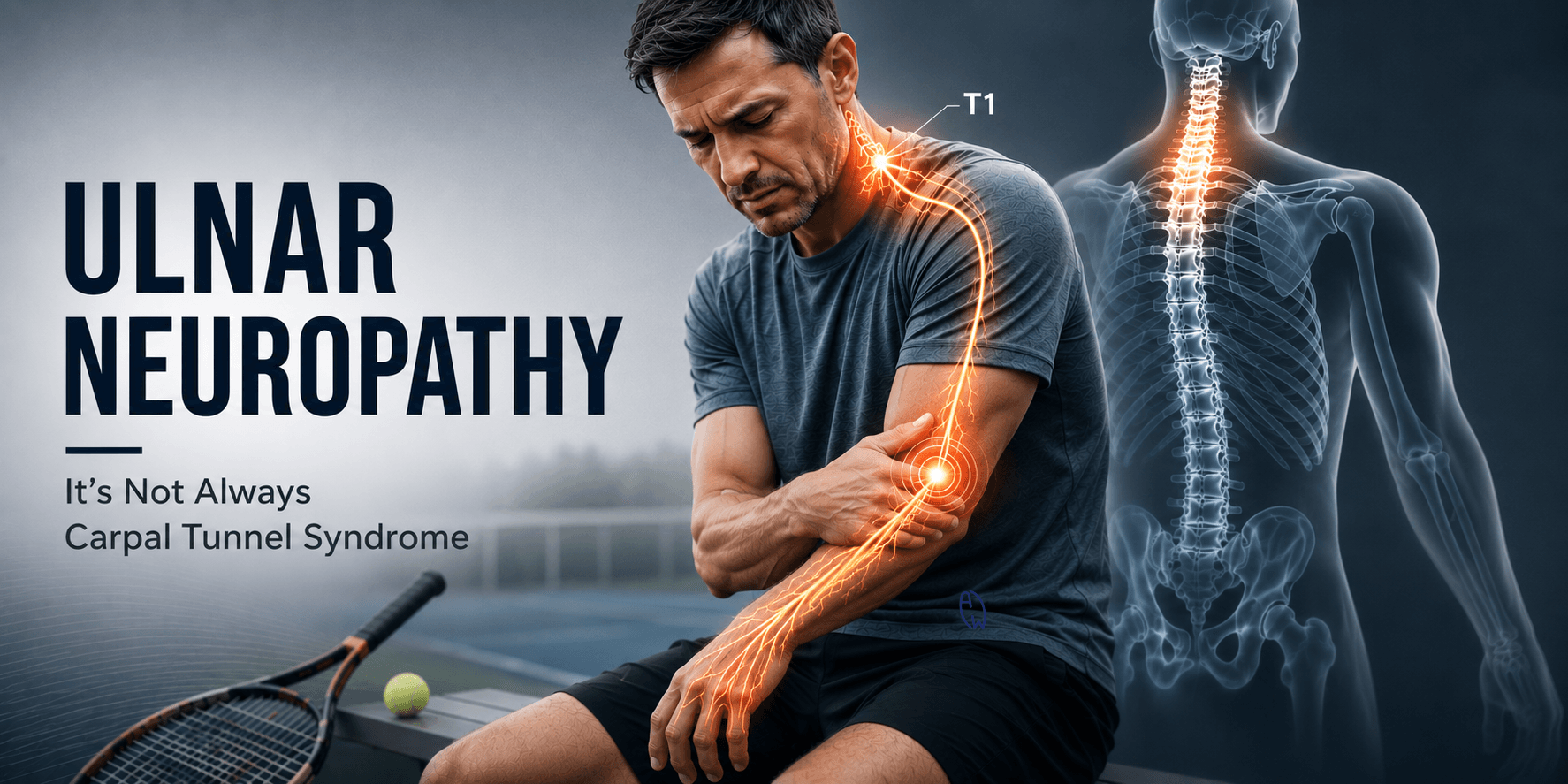
Ulnar Wrist Pain, Numbness & Weak Grip in Tennis Players: It May Not Be Carpal Tunnel Syndrome
If you are waking up at night with numbness, tingling, weakness, or even “clawing” of the fingers — especially the ring finger and pinky finger — it may not be carpal tunnel syndrome at all.
At All Well Scoliosis Centre, we recently saw a 45-year-old, Male, recreational tennis player who came in after struggling for several months with worsening hand symptoms. He had already searched online, used AI tools, and bought a wrist brace after convincing himself it was carpal tunnel syndrome.
Unfortunately, nothing improved.
Instead, his condition turned out to be something very different:
Ulnar neuropathy, also known as cubital tunnel syndrome.
━━━━━━━━━━━━━━━
The Symptoms Started Slowly
The patient complained of:
• Numbness and tingling in the ring and pinky fingers
• Symptoms worsening at night
• Weak grip strength
• Difficulty holding objects
• Early muscle loss in the hand
• Pain radiating from the elbow into the fingers
• Early clawing posture of the fingers
He had no major medical history. He played tennis twice a week and worked long hours on his laptop. Most importantly, he used his right hand for almost everything — sports, driving, work, carrying bags, and daily activities.
His wife was already a patient at our clinic, which was the only reason he finally decided to come in. He openly admitted he was skeptical that chiropractic care or movement-based rehabilitation could help.
That is perfectly okay.
As practitioners, our job is not to force belief.
Our job is to assess the body properly.
━━━━━━━━━━━━━━━
Why AI and Online Searches Cannot Replace a Physical Examination
During the examination, we performed a series of tests.
The moment pressure was applied around the inside of his elbow, he immediately jumped in shock as the pain shot down into his ring and pinky fingers.
That reaction changed everything for him.
Today, many people search their symptoms online or ask AI platforms for answers. AI can only respond based on the information you provide. It may not ask the right clinical questions, detect movement compensations, assess posture, test muscle strength, or physically examine your body.
More importantly, not all information fed into AI comes directly from practitioners specifically trained in human anatomy, biomechanics, neurological assessment, and hands-on clinical care.
So don’t blame AI for shortcut thinking.
Use professionals first.
Get properly assessed. Understand what is truly happening in your body. Then, if you still need more explanation or want help digesting the information, AI can become a useful educational tool alongside professional care.
Technology is powerful.
But there is still one thing AI cannot do:
AI cannot physically examine you.
Ai cannot feel muscle wasting.
Ai cannot assess nerve irritation.
Ai cannot test grip strength.
Ai cannot observe shoulder imbalance, spinal compensation, posture, or movement patterns.
In this patient’s case, the symptoms were never isolated to the fingers alone.
The irritation extended through the elbow, shoulder mechanics, and even nerve tension patterns connected higher up into the neck and upper thoracic spine, including the T1 region.
This is why we insist on proper imaging and evaluating the whole spine — not just the location of the pain.
Everything in the body is connected.
━━━━━━━━━━━━━━━
The T1 Nerve Root Can Also Be Involved
Many people assume numbness in the hand only comes from the wrist or elbow.
But the ulnar nerve pathway is connected all the way back to the cervical and upper thoracic spine, especially the T1 nerve root.
When the spine is imbalanced, rotated, compressed, or compensating over time, it can create additional stress on the nerve system.
That is why a proper spinal and postural assessment matters.
Pain is often only the final destination.
The real cause may begin much higher up.
This is one reason why we strongly believe in proper imaging and structural assessment rather than only chasing symptoms.
━━━━━━━━━━━━━━━
What Is Ulnar Neuropathy?
Ulnar neuropathy occurs when the ulnar nerve becomes compressed or irritated, most commonly at the elbow in an area called the cubital tunnel.
The ulnar nerve travels from the neck, through the shoulder, down the arm, and behind the elbow before reaching the hand.
When the nerve becomes repeatedly irritated, compressed, or trapped, it loses its ability to glide and move properly.
This can happen from:
• Repetitive elbow bending
• Leaning on the elbows
• Poor workstation posture
• Long hours driving with bent arms
• Sleeping with elbows flexed
• Repetitive sports like tennis
• Shoulder and spinal imbalance
• Muscle overuse and compensation patterns
Over time, the nerve becomes inflamed and loses space.
The result?
Pain, tingling, numbness, weakness, clawing, and eventually muscle wasting.
━━━━━━━━━━━━━━━
Why Muscle Loss Is a Serious Warning Sign
Early muscle wasting is the body’s warning sign that the nerve is struggling.
Nerves heal slowly.
If compression continues for too long, the nerve can become permanently damaged. At that stage, even surgery may not fully restore muscle function or grip strength.
This is why early intervention matters.
The good news for this patient was that he came in before severe irreversible nerve damage occurred.
His nerve was still responding.
His muscle weakness still had recovery potential.
━━━━━━━━━━━━━━━
Treatment Focus: Creating Space for the Nerve
The goal of conservative care is not simply to chase pain.
The goal is to reduce irritation and create space for the nerve to recover.
Treatment initially focused on:
• Activity modification
• Splinting and elbow positioning
• Reducing prolonged elbow bending
• Improving shoulder balance
• Nerve decompression strategies
• Postural correction
• Gradual strengthening
• Rest from aggravating tennis activity
• Ergonomic laptop support
• Improving nerve mobility
When the elbow stays bent for long periods, the cubital tunnel narrows and compresses the nerve further.
Something as simple as sleeping with a bent elbow or driving for long hours can repeatedly irritate the nerve without people realizing it.
━━━━━━━━━━━━━━━
Recovery Requires Discipline and Habit Change
One of the hardest parts of recovery is not the exercises.
It is changing habits.
This patient had to become mindful of:
• Sleeping on his elbow
• Resting elbows on tables
• Driving posture
• Laptop/iPad positioning
• Overusing the dominant arm
• Returning to tennis too aggressively
Mindfulness is discipline.
Healing requires consistency.
The encouraging part is that if the nerve calms down, muscle activation improves, and strength returns gradually, many patients can safely return to the activities they love — including tennis.
━━━━━━━━━━━━━━━
Listen to Your Body Before It Is Too Late
Your body is constantly communicating with you.
Do not wait until weakness becomes permanent.
Do not ignore muscle loss or clawing of the fingers.
Do not assume every hand symptom is carpal tunnel syndrome.
A proper physical examination matters.
If you are experiencing numbness in the ring finger and pinky finger, elbow pain, weakness, clawing, or loss of grip strength, seek professional assessment early.
The earlier the nerve irritation is addressed, the better the chance of recovery.