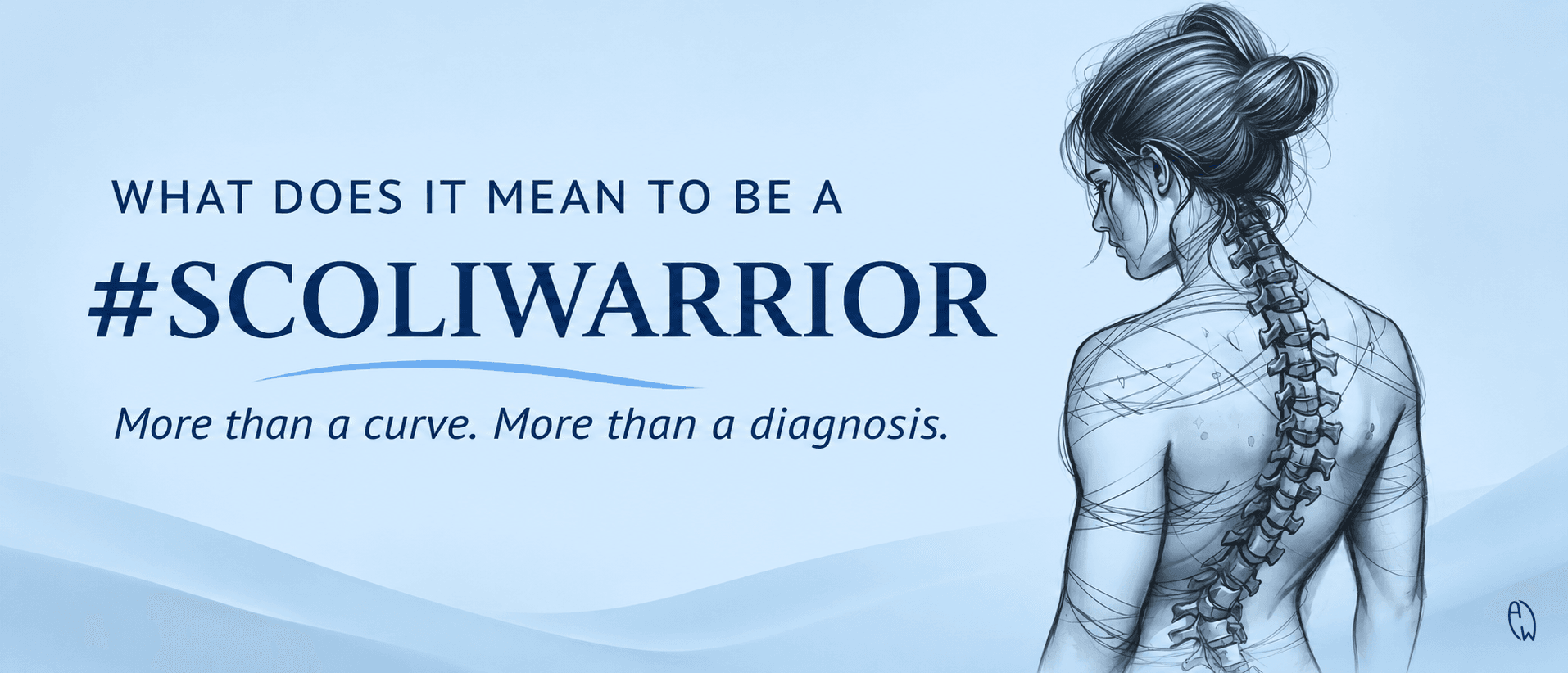
What Does It Mean to Be a #ScoliWarrior? A Journey of Strength, Resilience and Self-Acceptance
Living with scoliosis can be a journey filled with questions, uncertainty, challenges and moments of courage. Whether you were diagnosed during childhood, discovered scoliosis as an adult, are wearing a scoliosis brace, undergoing rehabilitation or recovering from spinal surgery, your experience is uniquely yours.
Across the scoliosis community, the hashtag #ScoliWarrior has become a symbol of strength, resilience, hope and solidarity. It represents people who are navigating life with scoliosis while continuing to pursue their dreams, build confidence and embrace who they are.
But what does it truly mean to be a ScoliWarrior?
A ScoliWarrior is a person living with scoliosis who embraces their journey with courage, resilience, self-acceptance and a willingness to advocate for their health. The term represents empowerment and solidarity within the scoliosis community, reminding people that scoliosis does not define who they are.
Being a ScoliWarrior is not about being fearless. It is not about having the perfect posture, achieving a smaller Cobb angle or undergoing a particular treatment. And it certainly does not mean you must be strong every single day.
It is about recognising that although scoliosis may be part of your story, it does not define the entirety of your life.
What Is a #ScoliWarrior?
A #ScoliWarrior is someone living with scoliosis who chooses to approach their journey with strength, awareness, resilience and self-compassion.
The term is commonly used as an inspirational identity within the scoliosis community. It celebrates people navigating the physical, emotional and practical challenges associated with scoliosis, including medical assessments, scoliosis bracing, scoliosis-specific exercises, rehabilitation, managing discomfort and adapting to life after spinal surgery.
But being a ScoliWarrior does not require you to undergo treatment or prove how much you can endure.
You may be a teenager learning to feel confident while wearing a scoliosis brace. You may be a parent supporting your child through a scoliosis diagnosis. You may be an adult learning to manage scoliosis as you grow older. You may have undergone spinal surgery, or you may simply be learning to understand your spine for the first time.
Every scoliosis journey is different, and every journey deserves respect.
The #ScoliWarrior identity is a reminder that scoliosis is part of your story, but it is not your entire story.
Why the #ScoliWarrior Identity Matters
A scoliosis diagnosis can bring unexpected emotions.
For children and teenagers, it may mean worrying about appearance, wearing a brace at school, feeling different from friends or wondering whether scoliosis will affect their future.
For adults, scoliosis may bring questions about physical activity, pain, mobility, work, aging and long-term spinal health.
Sometimes, the hardest part of living with scoliosis is not the curve itself. It is the uncertainty surrounding it.
You may wonder:
-
Will my scoliosis get worse?
-
Will I need to wear a scoliosis brace?
-
Can I continue playing sports?
-
Will scoliosis affect my future?
-
Will people notice my spinal asymmetry?
-
What treatment options are available to me?
These questions are understandable.
The #ScoliWarrior movement helps shift the conversation from fear and isolation toward awareness, community and empowerment.
It reminds people that they are not alone. There are others who understand the experience of living with scoliosis, who have faced similar questions and who have found their own ways to navigate the journey.
Support, understanding and connection can make a meaningful difference in how someone experiences scoliosis.
What Makes Someone a ScoliWarrior?
There is no single definition of a ScoliWarrior. But there are qualities that reflect the spirit of the movement.
1. The courage to seek answers
Being diagnosed with scoliosis can be overwhelming, particularly when you are unfamiliar with the condition.
A ScoliWarrior takes the time to learn about scoliosis, understand their spinal curve, ask questions and explore appropriate treatment options.
Being informed does not mean knowing everything about the spine. It means being willing to learn, seek professional guidance and make decisions based on reliable information.
Asking questions is an act of strength, not weakness.
2. The willingness to advocate for yourself
Your health journey should not be one in which you feel powerless.
Self-advocacy means expressing your concerns, asking for explanations, understanding the benefits and limitations of treatment and participating in decisions about your care.
Whether you are a parent advocating for your child, a teenager learning to communicate with healthcare professionals or an adult navigating scoliosis management, your voice matters.
You deserve to understand your condition and the options available to you.
3. Consistency without perfection
Scoliosis management may involve different approaches depending on age, curve characteristics, skeletal maturity, symptoms and individual needs.
Some individuals may benefit from scoliosis-specific exercises. Others may be advised to undergo bracing during growth, monitoring, rehabilitation or surgical consultation.
Consistency can be important when following an appropriate treatment or rehabilitation plan. But consistency does not mean perfection.
There will be days when you feel motivated and days when you feel tired. There may be setbacks, changes in routine or periods when you need to rest.
Progress does not require perfection. It requires patience, realistic expectations and the willingness to keep moving forward when you can.
4. Resilience through difficult moments
Resilience is not the absence of frustration, fear or disappointment.
It is the ability to acknowledge difficult moments without allowing them to define your entire experience.
Living with scoliosis may involve challenges that others cannot see. The emotional impact of wearing a brace, managing discomfort, attending appointments or worrying about progression may sometimes feel exhausting.
A ScoliWarrior does not have to pretend everything is fine.
Being resilient can mean seeking support, taking a break, speaking honestly about your feelings or finding a new way to approach a challenge.
5. The courage to embrace your individuality
Scoliosis can affect body symmetry, posture and the way someone perceives their appearance.
For some individuals, this can affect confidence and body image, particularly during adolescence.
But your body is not something you need to apologise for.
Your worth is not measured by the symmetry of your shoulders, the shape of your waist, the size of your Cobb angle or whether your spine looks straight.
You are more than your X-ray. You are more than your spinal curve. You are more than your diagnosis.
Self-acceptance does not mean giving up on healthcare or rehabilitation. It means recognising that taking care of your body and appreciating yourself can exist at the same time.
Can You Be a ScoliWarrior If You Have Had Spinal Surgery?
Absolutely.
The #ScoliWarrior identity is not limited to people who choose non-surgical treatment. It includes people who have undergone spinal fusion, those who are recovering from surgery, those who are continuing rehabilitation and those who are adapting to life after surgery.
Scoliosis treatment is not a competition between surgical and non-surgical approaches.
The appropriate treatment depends on individual circumstances, and different people may require different approaches throughout their lives.
Whether your journey involves observation, bracing, scoliosis-specific rehabilitation, surgery or a combination of approaches, you are still part of the scoliosis community.
Your journey deserves recognition regardless of the treatment path you have taken.
How to Become Part of the #ScoliWarrior Community
Being a ScoliWarrior does not require a formal membership, special achievement or particular treatment.
It begins with recognising that you are not alone.
Share your scoliosis story
Your story may help someone who has just been diagnosed.
Sharing your experience of wearing a brace, attending rehabilitation, managing scoliosis at school, navigating adulthood or recovering from surgery may help another person feel understood.
You do not need to share everything. Your story belongs to you, and you have the right to decide what you wish to share.
Connect with others living with scoliosis
Connecting with people who understand your experience can help reduce feelings of isolation.
Online communities, support groups, patient organisations and personal stories can provide opportunities to learn, share experiences and feel understood.
Remember to distinguish personal experiences from medical advice. What works for one person may not necessarily be appropriate for another.
Learn about your scoliosis
Understanding scoliosis can help you make more informed decisions.
Learn about your curve pattern, the importance of monitoring when recommended, the treatment options available and the role of exercise, bracing and other interventions when appropriate.
Knowledge can help replace uncertainty with a clearer understanding of your next steps.
Celebrate your progress
Progress does not always mean a change in your X-ray.
It may mean becoming more confident, returning to an activity you enjoy, developing better body awareness, improving strength, feeling more comfortable in your brace or learning to advocate for yourself.
Some victories may be visible. Others may be personal and quietly meaningful.
Both deserve to be celebrated.
A ScoliWarrior Is Not Required to Fight Every Day
Perhaps the most important message behind #ScoliWarrior is this:
You do not have to be strong all the time.
The word warrior can be empowering. But sometimes, the language of fighting can unintentionally make people feel that they must always be brave, positive or determined.
That is not what living with scoliosis should require.
You are allowed to feel frustrated.
You are allowed to be tired of appointments.
You are allowed to dislike wearing a brace.
You are allowed to worry about your future.
You are allowed to ask for help.
And you are allowed to have days when scoliosis is not the focus of your life.
You can be a ScoliWarrior while resting. You can be a ScoliWarrior while asking for help. You can be a ScoliWarrior without having to prove your strength to anyone.
Strength is not always about pushing forward.
Sometimes, strength is simply accepting where you are today and giving yourself the compassion to continue tomorrow.
What We Have Learned From People Living With Scoliosis
At All Well Scoliosis Centre, we believe that every scoliosis journey is different.
Some patients arrive worried about the progression of their spinal curve. Others are concerned about their appearance, physical limitations, discomfort or how scoliosis may affect their future.
For children and teenagers, scoliosis can sometimes become more than a physical concern. It may affect confidence, body image, participation in activities and how they feel about themselves around their peers.
For adults, the journey may involve learning how to manage physical changes, maintain mobility, understand their spine and make informed decisions about their health.
Over time, one important lesson is that the experience of scoliosis cannot be understood through an X-ray alone.
The Cobb angle is an important measurement in evaluating scoliosis, but a person's overall experience also includes physical function, confidence, comfort, emotional wellbeing, goals and quality of life.
We believe scoliosis care should recognise the person behind the diagnosis.
Every individual deserves to be heard, understood and supported as they navigate their own journey.
How All Well Scoliosis Centre Supports People Living With Scoliosis
At All Well Scoliosis Centre, our approach to scoliosis care focuses on education, individual assessment, personalised non-surgical care and rehabilitation.
Depending on an individual's needs and clinical suitability, our approach may incorporate scoliosis-specific exercises, specialised bracing, rehabilitation and other non-surgical approaches to scoliosis management.
Our aim is to help patients better understand their scoliosis, develop physical awareness, work towards their individual goals and make informed decisions about their care.
We believe that informed patients are empowered patients.
We believe that movement, strength, body awareness and appropriate physical activity can play an important role in supporting overall physical wellbeing.
And we believe that a scoliosis diagnosis should never diminish a person's confidence, potential or sense of identity.
Our goal is not simply to help people understand their spine.
It is to help them feel more confident about living their lives.
Because scoliosis may be part of your story, but it does not have to be the story that defines you.
Frequently Asked Questions About #ScoliWarrior
What does ScoliWarrior mean?
ScoliWarrior is an inspirational term used within the scoliosis community to describe someone living with scoliosis who embraces their journey with courage, resilience and self-acceptance. It represents empowerment, awareness and solidarity among people affected by scoliosis.
Is ScoliWarrior an official medical term?
No. ScoliWarrior is not an official medical diagnosis, treatment classification or clinical term. It is an inspirational identity and community expression associated with people living with scoliosis and those supporting them.
Who can be a ScoliWarrior?
Anyone living with scoliosis can identify as a ScoliWarrior, regardless of age, curve severity, treatment approach or stage of their journey. It may include children, teenagers, adults, people wearing scoliosis braces, individuals undergoing rehabilitation and those who have undergone spinal surgery.
Does being a ScoliWarrior mean you have to fight scoliosis?
No. The term is intended to encourage empowerment and resilience, not to create pressure to be positive or strong all the time. Living with scoliosis can involve difficult emotions, and seeking support, resting and asking for help are also signs of strength.
Can someone who has had scoliosis surgery be a ScoliWarrior?
Yes. The ScoliWarrior identity is inclusive of people who have undergone spinal surgery, those who are recovering and those who continue to manage scoliosis after surgery. It is not associated with any particular treatment approach.
How can I support someone with scoliosis?
You can support someone with scoliosis by listening without judgment, respecting their feelings about their body and treatment, encouraging informed healthcare decisions and avoiding assumptions about what they can or cannot do. For children and teenagers, emotional support and confidence can be particularly important.
How can I share my scoliosis journey?
You can share your scoliosis journey through personal stories, social media posts, photographs, videos or scoliosis support communities. The hashtag #ScoliWarrior can help connect your story with others who share similar experiences. You should only share personal information or medical images that you feel comfortable making public.
You Are More Than Your Scoliosis
Whether you are newly diagnosed, wearing a brace, undergoing scoliosis rehabilitation, recovering from surgery or living with scoliosis as an adult, you are part of a community that understands the journey.
You do not need to have the perfect spine.
You do not need to have the perfect treatment outcome.
You do not need to be fearless.
You simply need to remember that your life is bigger than your diagnosis.
You are a #ScoliWarrior. Not because you have to fight, but because your journey, your courage, your individuality and your life matter.
Share your story. Encourage someone else. Learn, grow and embrace your journey.
And remember, you are never defined by the curve in your spine.