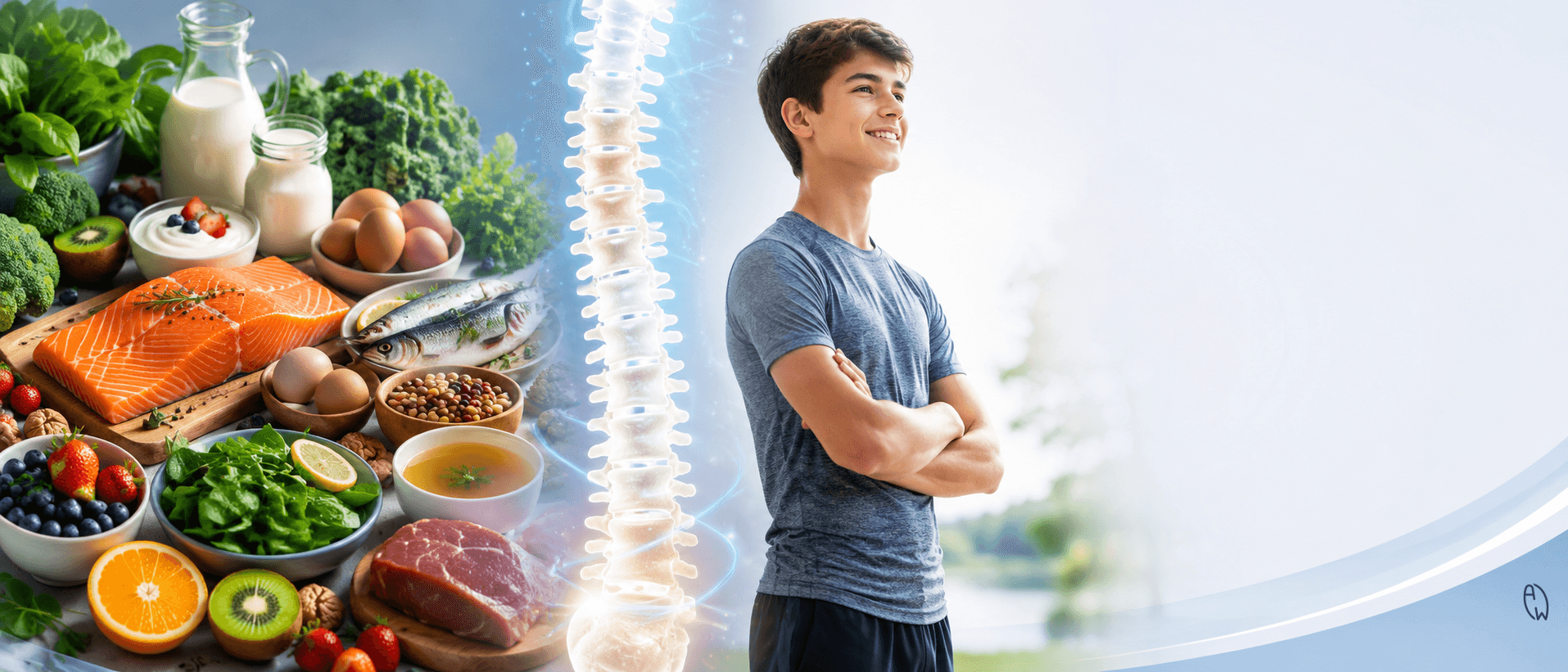
What We Recommend Every Scoliosis Family Eats More Of
Building a Strong Spine Starts in the Kitchen
When a child is diagnosed with scoliosis, most families immediately think about exercises, braces, or treatment options.
Very few people ask an equally important question:
Is my child eating the foods needed to build a strong spine?
The spine is not made from metal. It is living tissue.
Every vertebra, ligament, tendon, disc, muscle, and joint is constantly being rebuilt using nutrients from the foods we eat.
During puberty, this process accelerates dramatically. Bones lengthen, muscles grow, hormones fluctuate, and connective tissue remodels at a rapid pace.
If the body does not have the right building materials available, it becomes much harder to develop strong, resilient tissues that can support healthy posture and spinal stability.
At All Well Scoliosis Centre, we encourage families to think about nutrition as one of the foundations of spinal health.
While nutrition alone will not correct scoliosis, it can help support the bones, muscles, and connective tissues that play a role in maintaining spinal strength.
Here are some of the foods we encourage scoliosis families to eat more often.
Eggs: Nature's Multivitamin
Eggs are one of the most nutrient-dense foods available.
They provide:
-
High-quality protein
-
Choline for nervous system development
-
Vitamin D
-
Vitamin B12
-
Selenium
-
Healthy fats
Protein is particularly important because every muscle, ligament, tendon, and bone matrix in the body requires amino acids for growth and repair.
For growing teenagers, eggs are one of the simplest and most affordable foods to include regularly.
Dairy Products: Building Blocks for Growing Bones
Milk, yogurt, and cheese provide nutrients essential for skeletal development.
These include:
-
Calcium
-
Protein
-
Phosphorus
-
Vitamin B12
-
Potassium
Bone is constantly being remodeled throughout childhood and adolescence.
Without sufficient calcium and protein, the body may struggle to build and maintain optimal bone density.
For children who tolerate dairy well, dairy products can be a valuable part of a spine-supportive diet.
Fish: Food for Bones, Muscles, and the Nervous System
Fatty fish such as salmon, sardines, mackerel, and trout provide nutrients that support multiple systems involved in spinal health.
These include:
-
Omega-3 fatty acids
-
Vitamin D
-
Protein
-
Selenium
Omega-3 fats help support healthy inflammatory balance and cellular function throughout the body.
Vitamin D helps regulate calcium absorption and bone mineralization.
Aim to include fish several times per week whenever possible.
Fruits: Essential for Collagen Production
Many people think of fruit as simply a source of vitamins.
For scoliosis patients, fruits provide something especially important:
Vitamin C.
Vitamin C is required for collagen production.
Collagen is the primary structural protein found in:
-
Ligaments
-
Tendons
-
Fascia
-
Intervertebral discs
-
Joint capsules
Without adequate vitamin C, collagen becomes weaker and less organized.
Excellent choices include:
-
Oranges
-
Kiwi
-
Strawberries
-
Papaya
-
Pineapple
-
Guava
-
Berries
Encouraging a variety of colorful fruits helps support healthy connective tissue development.
Collagen-Rich Broths and Slow-Cooked Meats
Connective tissues are largely made from collagen.
Collagen requires specific amino acids to be built properly, particularly:
-
Glycine
-
Proline
-
Hydroxyproline
Traditional foods such as:
-
Bone broth
-
Slow-cooked soups
-
Chicken stock
-
Beef broth
-
Tendon soups
naturally provide many of these building blocks.
These foods have been used across cultures for generations and can be a valuable addition to a growing child's diet.
Many families find that simply incorporating homemade soups a few times per week is an easy way to increase collagen-supporting nutrients.
Meat: Complete Protein for Growth
Muscles act as the body's natural brace.
Strong muscles help stabilize the spine and improve posture.
To build muscle effectively, the body needs adequate protein intake.
Quality protein sources include:
-
Chicken
-
Beef
-
Lamb
-
Turkey
-
Pork
These foods provide essential amino acids that support:
-
Muscle development
-
Tissue repair
-
Bone growth
-
Recovery from exercise
For physically active children and teenagers, sufficient protein intake is especially important.
Legumes: Plant-Based Support for Growth
Beans, lentils, chickpeas, and other legumes provide valuable nutrients including:
-
Protein
-
Fiber
-
Magnesium
-
Iron
-
Zinc
These nutrients support growth, energy production, and tissue repair.
Legumes are particularly useful for families looking to diversify protein sources while supporting overall health.
Leafy Greens: The Forgotten Superfood
Leafy green vegetables are packed with nutrients involved in bone and connective tissue health.
Examples include:
-
Spinach
-
Bok choy
-
Kai lan
-
Chye sim
-
Kale
-
Broccoli
These vegetables provide:
-
Magnesium
-
Vitamin K
-
Folate
-
Calcium
-
Antioxidants
Vitamin K plays an important role in directing calcium into bones where it belongs.
A simple goal is to include at least one serving of leafy greens with lunch and dinner.
What We Encourage Families to Reduce
Supporting spinal health is not only about what to eat more of.
It's also about reducing foods that displace nutrient-rich options.
We encourage families to limit:
-
Sugary beverages
-
Excessive soft drinks
-
Highly processed snacks
-
Frequent fast food meals
-
Ultra-processed convenience foods
These foods often provide calories without supplying the nutrients required for growth and tissue development.
A Simple Rule for Scoliosis Nutrition
Instead of focusing on complicated diets, we often suggest one simple question:
"Does this meal help build a stronger body?"
A spine-supportive meal typically includes:
✓ A quality protein source
✓ Fruits or vegetables
✓ Healthy fats
✓ Whole-food carbohydrates
✓ Adequate hydration
The goal is not perfection.
The goal is consistently providing the body with the materials it needs to grow, repair, and adapt.
The Bigger Picture
No food can cure scoliosis.
No supplement can magically straighten a spine.
However, nutrition remains one of the most overlooked factors in supporting healthy growth.
Exercise teaches the body what to build.
Nutrition provides the raw materials.
When combined with scoliosis-specific rehabilitation, strength training, movement education, and healthy lifestyle habits, proper nutrition helps create the strongest possible foundation for long-term spinal health.
A stronger spine starts with a stronger body.
And a stronger body starts with what we put on our plate every day.