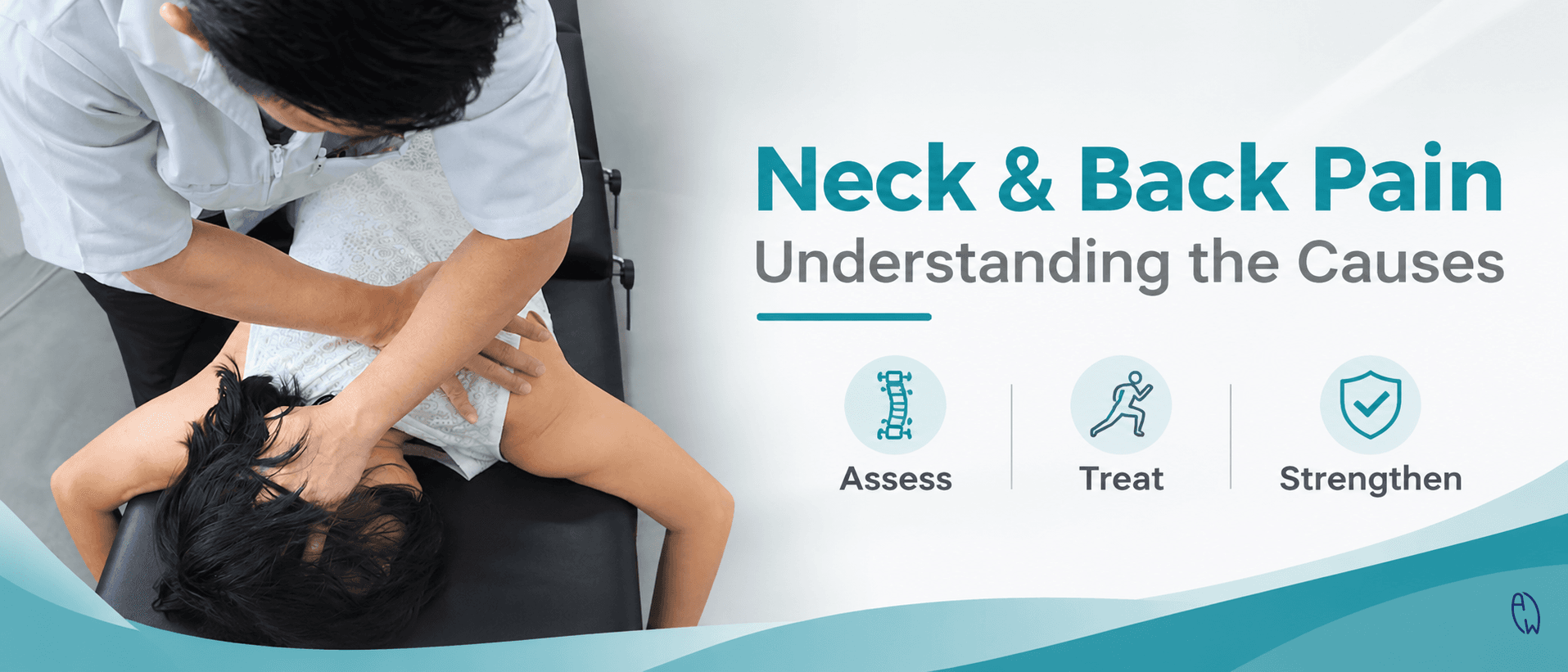
Neck and Back Pain: Causes, Symptoms and Non-Surgical Treatment in Singapore
Neck and back pain are among the most common musculoskeletal complaints, affecting people of all ages, from students and office workers to athletes and older adults. Prolonged sitting, excessive smartphone use, sports injuries, whiplash, herniated discs and nerve compression are some of the possible contributing factors.
While pain medication may provide temporary relief, understanding the underlying cause is important for appropriate treatment and long-term management.
At All Well Scoliosis Centre in Singapore, we take a comprehensive, non-surgical approach to musculoskeletal care. Our focus is on assessing spinal biomechanics, joint mobility, muscle function and movement patterns to develop an individualized treatment and rehabilitation plan.
Our goal is not simply to relieve discomfort, but to help patients improve mobility, develop strength and maintain better physical function.
What Are the Common Causes of Neck and Back Pain?
Neck and back pain can develop from various conditions involving muscles, joints, spinal discs, nerves and other structures.
Understanding the possible causes is the first step towards appropriate management.
1. Text Neck: Can Smartphone Use Cause Neck Pain?
Text neck is an informal term describing neck discomfort associated with prolonged periods of looking down at smartphones, tablets and other electronic devices.
When the head remains tilted forward for extended periods, the muscles supporting the neck must work continuously to maintain this position. Over time, sustained positioning may contribute to muscle fatigue, stiffness and discomfort.
Common symptoms include:
-
Neck stiffness and muscle tension
-
Discomfort around the shoulders and upper back
-
Headaches associated with neck tension
-
Reduced neck mobility
-
Discomfort after prolonged computer or smartphone use
Text neck is not limited to smartphone users. Students studying for long hours, office workers using computers and individuals maintaining awkward positions during exercise may experience similar symptoms.
However, poor posture is not the only cause of neck pain. Physical conditioning, stress, sleep quality and individual movement habits may also influence symptoms.
Regular movement breaks, appropriate workstation adjustments and strengthening exercises can help manage discomfort.
2. Whiplash Injuries: Neck Pain After Sudden Movement
Whiplash-associated disorders occur when the neck experiences rapid acceleration and deceleration forces, commonly during motor vehicle accidents.
Whiplash can also occur during contact sports, falls and other sudden-impact activities.
Symptoms may include:
-
Neck pain and stiffness
-
Reduced range of motion
-
Headaches
-
Shoulder and upper-back discomfort
-
Dizziness or difficulty concentrating in some cases
Symptoms may appear immediately or develop over the following hours.
Although many people recover with appropriate management, some experience persistent symptoms.
Neck pain following a significant accident should be medically evaluated, particularly when accompanied by severe headaches, numbness, weakness or other neurological symptoms.
3. Herniated Disc: Understanding a Slipped Disc
A herniated disc, commonly called a slipped disc, occurs when some of the softer inner material of a spinal disc protrudes through a weakened or damaged outer layer.
Spinal discs act as cushions between the vertebrae, allowing movement and helping distribute mechanical loads.
A herniated disc may cause symptoms when it irritates or compresses nearby nerve structures.
The symptoms depend on the location of the affected disc.
Cervical disc herniation (neck):
-
Neck pain
-
Pain radiating into the shoulder or arm
-
Tingling or numbness in the hand or fingers
-
Muscle weakness in some cases
Lumbar disc herniation (lower back):
-
Lower-back discomfort
-
Pain radiating into the buttock or leg (sciatica)
-
Tingling or numbness
-
Leg or foot weakness
Not every herniated disc causes symptoms. Some are discovered incidentally during medical imaging.
Many symptomatic disc herniations improve with conservative management, including appropriate physical activity, exercise-based rehabilitation and medical care when necessary. Surgery may be considered in selected cases, particularly when significant or progressive neurological problems occur.
4. Pinched Nerve: Understanding Nerve Compression
A pinched nerve occurs when surrounding structures, such as a herniated disc, bone, ligaments or other tissues, place pressure on a nerve.
In the spine, nerve compression may occur because of disc herniation, degenerative changes or narrowing of the spaces through which nerves travel.
This can lead to a condition known as radiculopathy.
Common symptoms include:
-
Sharp, burning or radiating pain
-
Numbness or tingling
-
Muscle weakness
-
Altered sensation along the affected nerve pathway
A pinched nerve is not necessarily permanent. Many cases improve with appropriate conservative management.
However, progressive weakness, difficulty walking, loss of bladder or bowel control, or numbness around the groin requires urgent medical assessment.
Why Does Neck or Back Pain Keep Coming Back?
Recurring neck and back pain may involve more than one contributing factor.
For some individuals, discomfort may be associated with:
-
Reduced muscular strength or endurance
-
Prolonged sedentary behaviour
-
Limited joint mobility
-
Repetitive physical loading
-
Previous injuries
-
Age-related spinal changes
-
Inadequate recovery and sleep
Posture and spinal alignment may influence how an individual moves and distributes physical loads, but they do not independently explain every case of pain.
Persistent pain can also involve increased sensitivity within the nervous system, meaning symptoms may continue even after an initial injury has healed.
This is why a comprehensive assessment should consider musculoskeletal function, neurological symptoms, lifestyle factors and individual health history rather than focusing on posture alone.
Our Holistic Approach to Neck and Back Pain at All Well Scoliosis Centre
At All Well Scoliosis Centre, we believe effective care begins with understanding the individual, not simply treating the location of pain.
Our approach emphasizes careful assessment, individualized rehabilitation and appropriate non-surgical management.
Step 1: Comprehensive Biomechanical Assessment
We assess relevant aspects of spinal and musculoskeletal function, including:
-
Spinal mobility and flexibility
-
Hip and pelvic movement
-
Muscle strength and endurance
-
Movement coordination
-
Joint function
-
Neurological signs when clinically indicated
These findings help identify movement limitations and functional impairments that may contribute to discomfort.
Step 2: Three-Dimensional Postural Assessment
Our postural assessment examines body alignment and movement patterns in three dimensions.
We may evaluate:
-
Head and shoulder positioning
-
Spinal curvature and trunk alignment
-
Pelvic orientation
-
Weight distribution and movement symmetry
-
Compensatory movement patterns
This assessment provides useful information for planning individualized exercises and rehabilitation.
However, postural asymmetry does not always indicate a medical problem or explain the presence of pain.
For a deeper understanding of how posture and spinal alignment relate to scoliosis, read our article: Posture and Scoliosis: Why Proper Alignment Matters.
Step 3: Diagnostic Imaging When Clinically Necessary
X-rays may be recommended when there is a specific clinical indication, such as suspected structural spinal abnormalities.
Imaging is not routinely required for uncomplicated neck or back pain.
X-rays primarily show bones and spinal alignment. When significant disc, nerve or soft-tissue pathology is suspected, a medical practitioner may recommend MRI or other appropriate investigations.
Our Non-Surgical Treatment Approach
Treatment recommendations depend on the patient's symptoms, assessment findings, medical history and suitability for conservative care.
1. Chiropractic and Joint Mobilization
When appropriate, carefully selected manual techniques may help improve joint mobility and provide short-term symptom relief.
Treatment is adapted to the individual's condition, and spinal manipulation is not suitable for every patient.
We do not regard manual adjustments as a method of permanently repositioning spinal bones or correcting every underlying cause of pain.
2. Muscle Strengthening and Flexibility Training
Muscles play an important role in supporting the spine and controlling movement.
An individualized exercise programme may include:
-
Strengthening the neck and upper-back muscles
-
Core stability and trunk endurance exercises
-
Hip and pelvic strengthening
-
Mobility exercises for restricted joints
-
Gentle stretching where appropriate
The objective is to improve physical capacity and movement tolerance rather than simply stretching every tight muscle or strengthening every muscle that appears weak.
3. Posture Education and Movement Retraining
Posture education helps patients become more aware of their movement habits during everyday activities.
We may recommend strategies for:
-
Working comfortably at a desk
-
Using smartphones and electronic devices
-
Taking regular movement breaks
-
Lifting and carrying objects
-
Returning gradually to exercise
-
Building tolerance for prolonged activities
Rather than encouraging patients to maintain one rigid posture throughout the day, we emphasize movement variety, physical conditioning and sustainable habits.
4. Personalized Rehabilitation and Long-Term Management
Neck and back pain management should extend beyond short-term symptom relief.
Rehabilitation may focus on improving strength, mobility, confidence in movement and the ability to resume daily activities.
At All Well Scoliosis Centre, our rehabilitation philosophy combines appropriate chiropractic care, exercise-based rehabilitation and patient education.
Learn more about our approach in Chiropractic Rehabilitation in Singapore: Rehabilitation First, Adjustment Second.
For patients with scoliosis, specialised exercise approaches may also be considered when clinically appropriate. Our ScoliBalance® programme focuses on individualised scoliosis-specific exercises, postural control and movement awareness.
These scoliosis-specific methods are not general treatments for every type of neck or back pain. Their suitability depends on the individual's spinal condition and clinical assessment.
When Should You Seek Professional Help for Neck or Back Pain?
Consider seeking a healthcare assessment if:
-
Pain persists or repeatedly returns
-
Symptoms interfere with work, sleep or daily activities
-
Pain radiates into the arms or legs
-
Numbness or tingling develops
-
Mobility becomes increasingly restricted
Seek urgent medical attention for progressive muscle weakness, loss of bladder or bowel control, numbness in the saddle area, fever with severe spinal pain, or severe symptoms following significant trauma.
Not all neck and back pain is caused by mechanical or postural problems. Appropriate medical evaluation is important when symptoms suggest a more serious underlying condition.
Frequently Asked Questions
Can neck and back pain improve without surgery?
Yes. Many common causes of neck and back pain respond to conservative management, including exercise, education, gradual activity and appropriate healthcare treatment. Surgery is generally reserved for specific conditions or circumstances.
Is poor posture the main cause of neck pain?
Not necessarily. Sustained positioning may contribute to discomfort, but pain is multifactorial. Muscle conditioning, physical activity, stress, sleep and previous injuries can also play a role.
Can a herniated disc heal naturally?
Some herniated discs decrease in size over time, and symptoms may improve without surgery. Recovery varies depending on the location, severity, neurological findings and individual circumstances.
Should I get an X-ray for neck or back pain?
Imaging is usually recommended only when clinical findings suggest it may change diagnosis or treatment.
Can chiropractic care help with neck and back pain?
Some manual therapies may provide symptom relief for selected patients, particularly when combined with exercise and education. The benefits and risks depend on the condition and technique used. A proper assessment is necessary to determine suitability.
Managing Neck and Back Pain Starts With Understanding the Cause
Neck and back pain can affect anyone, from students and office workers to athletes and older adults.
Although symptoms may feel similar, their underlying causes and contributing factors can differ considerably.
At All Well Scoliosis Centre, Singapore, our focus is on individualized assessment, appropriate conservative care and rehabilitation strategies that support better movement and long-term musculoskeletal health.
Our aim is not to promise an instant cure, but to help patients understand their condition, improve physical function and work towards sustainable recovery.
Experiencing persistent neck or back pain?
Visit All Well Scoliosis Centre to learn more about our approach and arrange an assessment to determine whether our services are appropriate for your condition.
Medical References
-
Cohen, S. P. (2015). Epidemiology, diagnosis, and treatment of neck pain. Mayo Clinic Proceedings, 90(2), 284–299. https://doi.org/10.1016/j.mayocp.2014.09.008
-
Blanpied, P. R., et al. (2017). Neck pain: Revision 2017. Clinical practice guidelines. Journal of Orthopaedic & Sports Physical Therapy, 47(7), A1–A83. https://doi.org/10.2519/jospt.2017.0302
-
Hartvigsen, J., et al. (2018). What low back pain is and why we need to pay attention. The Lancet, 391, 2356–2367. https://doi.org/10.1016/S0140-6736(18)30480-X
-
Foster, N. E., et al. (2018). Prevention and treatment of low back pain: Evidence, challenges, and promising directions. The Lancet, 391, 2368–2383. https://doi.org/10.1016/S0140-6736(18)30489-6
-
Steffens, D., et al. (2016). Prevention of low back pain: A systematic review and meta-analysis. JAMA Internal Medicine, 176(2), 199–208. https://doi.org/10.1001/jamainternmed.2015.7431
-
Mayo Clinic. Herniated disk: Symptoms and causes. https://www.mayoclinic.org/diseases-conditions/herniated-disk/symptoms-causes/syc-20354095
-
World Health Organization. (2023). WHO guideline for non-surgical management of chronic primary low back pain in adults in primary and community care settings. https://www.who.int/publications/i/item/9789240081789