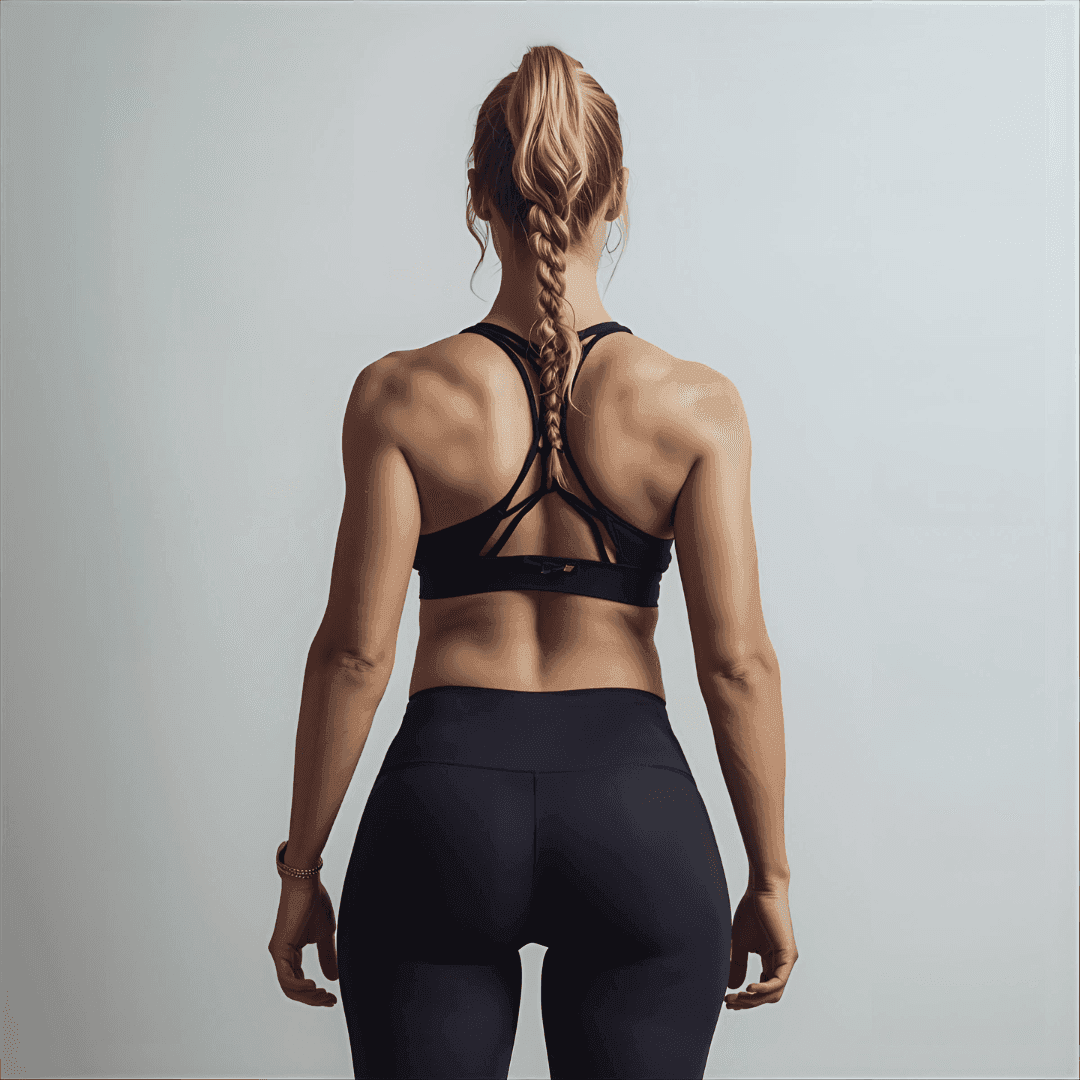
Scoliosis and Sports: How Athletes Manage Scoliosis Through Brain Training, Strength and Movement
Can you play sports with scoliosis? Can you lift weights, run, swim, dance or train competitively without making your spinal curve worse?
For many people, the answer is yes. Having scoliosis does not automatically mean giving up sports, exercise or the physical activities you love. However, managing scoliosis through exercise requires more than simply strengthening your back or stretching tight muscles. It requires understanding your individual spinal curve, how your body compensates, and how your brain coordinates movement, balance and muscle activity.
Athletes understand something that is often overlooked in conventional scoliosis discussions: performance is not just about how strong your muscles are. It is also about how well your brain understands and controls your body.
Think about a tennis player returning a fast serve, a gymnast landing after a jump, or a martial artist changing direction during a kick. Within fractions of a second, the brain must process visual information, recognise body position, estimate distance, anticipate movement and coordinate the muscles needed to execute the action.
This is called sensorimotor integration — the process through which the nervous system receives sensory information and uses it to organise movement.
For someone with scoliosis, understanding this relationship between the brain, nervous system and musculoskeletal system offers a valuable perspective on exercise and spinal health.
At All Well Scoliosis Centre, we believe that effective scoliosis management starts with understanding your own body. When you know your curve pattern, recognise your movement compensations and understand which muscles need better support and control, you can make more informed decisions about how to train.
The goal is not to follow every scoliosis exercise you see on social media. It is to understand what works for your particular curve and learn how to manage your body with confidence.
1. How Athletes Train Their Brains to Understand Space and Movement
Have you ever wondered how a professional athlete can move so quickly without consciously thinking about every muscle?
Consider a basketball player jumping to catch a rebound.
Before the player even leaves the ground, the brain is already processing several things:
-
Where is the ball?
-
How far away is it?
-
How quickly is it moving?
-
Where is my body in relation to the ball?
-
How much force do I need to jump?
-
Where should my feet land?
-
How do I maintain balance when I come down?
The athlete is not consciously calculating every movement. The brain combines information from several sensory systems to predict, coordinate and adjust the body's actions.
There are three particularly important sources of sensory information.
A. Proprioception: Knowing Where Your Body Is Without Looking
Proprioception is your ability to sense the position and movement of your body parts without having to look at them.
Try closing your eyes and touching your nose with your index finger.
You can do this because your nervous system receives information from sensory receptors in your muscles, tendons and joints.
These receptors help your brain understand:
-
Where your arms and legs are positioned.
-
How much your joints are moving.
-
How much force your muscles are producing.
-
Whether your body is shifting or rotating.
-
How your body responds to movement.
Athletes constantly use proprioception.
A dancer knows where her feet are during a turn. A footballer knows how much pressure to apply when changing direction. A gymnast understands where the body is during a rotation, even when the surroundings appear to move rapidly.
For someone with scoliosis, body awareness is particularly relevant.
You may have noticed that one shoulder appears higher, your pelvis shifts slightly, or your trunk naturally rotates in a particular direction.
You may also feel crooked even when you believe you are standing straight.
These experiences can involve the way your brain processes information about body position and alignment.
However, not everyone with scoliosis has impaired proprioception. Research has identified proprioceptive differences in some groups with adolescent idiopathic scoliosis, but the relationship between these findings and the development or progression of scoliosis is not fully established.
B. The Vestibular System: Understanding Balance and Gravity
Located in the inner ear, the vestibular system helps your brain understand head movement, acceleration and orientation relative to gravity.
It consists of structures that detect different types of movement:
-
The semicircular canals detect rotational head movements.
-
The otolith organs detect linear acceleration and the effects of gravity.
Why does this matter to an athlete?
Imagine a figure skater performing multiple rotations.
When the athlete stops spinning, the vestibular system helps the brain process the movement and regain a stable sense of orientation.
Similarly, a martial artist changing direction, a runner navigating uneven terrain or a gymnast landing after a jump depends on vestibular information to maintain balance.
For people with scoliosis, balance and postural control may also be relevant areas to assess.
The important distinction is that scoliosis does not automatically mean the vestibular system is dysfunctional. Rather, balance involves the integration of several systems, and individual differences should be assessed rather than assumed.
C. Vision: Understanding Where You Are in Your Environment
Vision gives the brain information about distance, depth, direction and movement.
A tennis player uses visual information to anticipate where the ball will land.
A footballer uses peripheral vision to recognise other players while controlling the ball.
A gymnast uses visual references to orient themselves during movement.
But athletes do not depend on vision alone.
Their brains combine visual information with proprioceptive and vestibular input to understand where the body is and how it is moving.
This combination allows the athlete to react, anticipate and adjust movement efficiently.
The Missing Connection: Space and Time
There is another important element in athletic performance: timing.
An athlete must understand not only where the body is, but also when to move.
For example, a sprinter needs to coordinate the timing of muscle activation, foot contact and body acceleration.
A tennis player must judge the speed of an incoming ball and time the racket movement correctly.
A dancer must coordinate balance, rotation and rhythm.
The brain uses incoming sensory information, previous movement experience and predictions about what will happen next to organise these actions.
This involves both anticipatory control and feedback.
-
Anticipatory control: The brain prepares the body for a movement before it happens.
-
Feedback control: The nervous system uses sensory information during and after movement to make adjustments.
This is why athletic training involves much more than building bigger muscles. It develops the ability to coordinate strength, timing, balance and movement under changing conditions.
And this is where we can begin to understand the importance of movement awareness in scoliosis management.
2. What Does the Brain Have to Do With Scoliosis?
Scoliosis is a three-dimensional spinal condition. It involves more than a sideways curve. It can also involve vertebral rotation and changes in the positioning and shape of the rib cage and trunk.
Two people with similar Cobb angles may have very different physical experiences.
One may have excellent balance and muscular endurance.
Another may experience fatigue, restricted movement or difficulty maintaining a comfortable posture.
Someone else may have noticeable trunk rotation but little discomfort.
Why?
Because the spine does not function independently from the rest of the body.
Your brain and nervous system constantly receive information from your muscles, joints, inner ear and eyes. They use that information to coordinate posture, movement and muscular responses.
In some individuals with scoliosis, research has identified differences in proprioception and postural control.
A systematic review and meta-analysis published in 2022 examined 11 studies involving 1,121 participants and found proprioceptive differences in groups with adolescent idiopathic scoliosis compared with controls.
However, this does not prove that proprioceptive differences cause scoliosis. The relationship is complex, and further research is needed.
What we can take from this research is that understanding scoliosis should involve more than looking at the spinal X-ray.
We should also consider how the person moves and functions.
For example:
-
How do you distribute your weight between your left and right sides?
-
How does your trunk rotate during movement?
-
Can you maintain balance during single-leg activities?
-
How well do your hips and shoulders coordinate?
-
Do you have difficulty controlling certain movements?
-
How do your breathing mechanics change during exercise?
The spine provides the structure, but the nervous system helps coordinate how the body moves around that structure.
For a deeper explanation, read our article on Why Do I Feel Crooked Even When I Stand Straight? The Brain-Scoliosis Connection.
3. Why Generic Exercise Is Not Always Enough for Scoliosis
One of the most common misconceptions about scoliosis is that everyone should perform the same exercises.
You may see recommendations on social media suggesting that people with scoliosis should:
-
Do more planks.
-
Stretch one side of the body.
-
Strengthen their core.
-
Swim regularly.
-
Perform back extensions.
-
Hang from a pull-up bar.
Some of these exercises may be useful. However, an exercise that is appropriate for one person may not address the needs of another.
Why?
Because scoliosis patterns are different.
A person with a right thoracic curve may have a different rib cage configuration, trunk rotation and muscular recruitment pattern from someone with a left lumbar curve or a double major curve.
Even people with similar curve patterns may have different strength, mobility, symptoms and functional limitations.
This is why understanding your curve matters before deciding what exercises to prioritise.
Instead of asking:
"Which exercise is best for scoliosis?"
A better question is:
"Which muscles need more support, which areas need better mobility, and how should I train my body according to my curve pattern?"
That is the foundation of individualised scoliosis exercise management.
For more information, read our guide to Scoliosis-Specific Exercises (PSSE): Evidence-Based Rehabilitation for Scoliosis.
4. How Athletes Can Apply These Principles to Scoliosis Management
Athletes develop their physical abilities through structured training. The same principle can be applied to scoliosis management, with appropriate modifications based on the individual's curve, symptoms and physical needs.
A. Curve-Specific Strength Training
Strength training should not be about making both sides of the body look identical.
It should be about developing the muscular capacity needed to support your particular movement patterns.
Depending on the individual's assessment, training may focus on:
-
Trunk stabilisation and endurance.
-
Abdominal and deep core muscle coordination.
-
Gluteal strength and pelvic control.
-
Hip strength and lower-limb stability.
-
Scapular and shoulder control.
-
Muscular endurance during prolonged activity.
The objective is to develop strength that transfers into daily activities and sports performance.
Importantly, scoliosis does not automatically mean one side is weak and the other is tight.
Muscle function must be assessed rather than assumed from the direction of the curve.
For example, a person with a right thoracic curve should not automatically be told to strengthen the left side or stretch the right side. The actual muscular and functional presentation matters.
B. Scoliosis-Specific Exercises: Teaching the Body to Reposition
Physiotherapeutic Scoliosis-Specific Exercises (PSSE) are designed to address the individual's three-dimensional curve pattern.
Approaches such as Schroth-based exercises and ScoliBalance® incorporate concepts including:
-
Three-dimensional self-correction.
-
Postural awareness.
-
Rotational control.
-
Breathing strategies.
-
Active stabilisation.
-
Transferring corrected posture into everyday movement.
This is particularly relevant because learning a new posture is not enough.
The individual needs to develop the ability to recognise, reproduce and maintain that position during functional activities.
For athletes, this concept can eventually be integrated into sport-specific movement under appropriate professional guidance.
C. Mobility: Creating Better Movement Options
Mobility is not simply about becoming more flexible.
It is about having sufficient joint movement and the control to use that movement efficiently.
Depending on the athlete's needs, mobility training may include:
-
Thoracic mobility for controlled upper-body rotation.
-
Hip mobility for running, squatting and changes of direction.
-
Shoulder mobility for overhead activities.
-
Rib cage mobility to support breathing mechanics.
-
Ankle mobility for landing and lower-limb movement.
The purpose is not to force a structurally curved spine into a perfectly symmetrical position.
It is to improve comfortable, functional movement while respecting the individual's anatomy.
D. Flexibility and Muscle Coordination
Stretching can be useful when an individual has specific restrictions.
However, stretching should not be prescribed simply because one side appears longer or shorter.
A good programme considers muscle length, strength, endurance, joint mobility and movement control.
The objective is to improve the balance between mobility and stability, not to stretch every tight-feeling area indiscriminately.
E. Balance and Proprioceptive Training
This is where we can learn from athletic conditioning.
Exercises may include:
-
Single-leg balance.
-
Controlled weight shifting.
-
Balance challenges with head movement.
-
Coordinated arm and leg movements.
-
Controlled rotational movements.
-
Sport-specific footwork and landing drills.
These activities challenge the nervous system to integrate sensory information and coordinate muscular responses.
The level of difficulty should progress according to the individual's abilities and safety.
5. Understanding Your Curve Before Choosing Your Exercise
This is perhaps the most important part of managing scoliosis independently.
Before following an exercise programme, you should understand your spinal curve and how it affects your body.
A proper assessment may consider:
1. Curve pattern
Where is the curve located? Is it thoracic, lumbar, thoracolumbar or a combination?
2. Spinal rotation
What is happening to the vertebrae and rib cage in three dimensions?
3. Pelvic positioning
Is there pelvic asymmetry or a difference in how weight is distributed through the lower limbs?
4. Muscle function
Which muscles demonstrate reduced strength, endurance, coordination or control?
5. Mobility
Are there restrictions in the hips, shoulders, thoracic region or other joints?
6. Functional movement
How does your body perform during walking, squatting, bending, rotation, running or your chosen sport?
7. Curve progression and skeletal maturity
For growing adolescents, monitoring is particularly important because the risk of progression depends on factors including curve magnitude and remaining growth.
This information helps determine whether exercise alone is appropriate or whether additional treatment, such as bracing, is needed.
Remember that exercise is not a substitute for appropriate medical assessment or monitoring.
If you want to understand the importance of spinal measurements, see our guide to Cobb Angle and Scoliosis: Measurement, Severity and Treatment.
6. Can Athletes With Scoliosis Continue Playing Sports?
In many cases, yes.
Having scoliosis does not automatically disqualify someone from participating in sports.
The appropriate activity depends on the individual's curve, symptoms, functional capacity, treatment status and medical advice.
For many people, remaining physically active is an important part of maintaining general health, muscular fitness and confidence.
However, it is important to distinguish between participating in sport and using sport as a treatment for scoliosis.
Swimming, running, dancing and strength training can all contribute to physical fitness. But no single sport has been established as a universal corrective treatment for scoliosis.
Similarly, scoliosis surgery is not automatically necessary simply because someone has a spinal curve.
Treatment decisions depend on clinical factors such as curve magnitude, progression, skeletal maturity, symptoms and overall health.
The objective of conservative management is to help suitable individuals maintain function, manage symptoms and address progression risk appropriately.
For adults who want to remain active, we also recommend reading Can I Exercise With Scoliosis? A Guide for Adults.
7. Our Approach at All Well Scoliosis Centre: Teaching You to Understand Your Own Body
At All Well Scoliosis Centre, we believe that good scoliosis management should empower people with knowledge and practical skills.
We do not want patients to become dependent on endless appointments or random exercises they find online.
We want them to understand what is happening in their bodies and how to take an active role in managing their spinal health.
Our approach combines several components.
ScoliBalance®
ScoliBalance® is a scoliosis-specific exercise approach that teaches individuals to understand their curve, practise three-dimensional postural correction and develop better movement awareness.
Patients learn to recognise their individual postural pattern and practise corrective strategies that can be incorporated into everyday activities.
Learn more about our ScoliBalance and scoliosis-specific exercise approach.
ScoliBrace™
A customised three-dimensional corrective brace may be recommended for appropriate patients.
Bracing is particularly important for selected growing adolescents who are at risk of curve progression.
Brace design, fit, prescribed wear time and follow-up should be individually assessed.
You can learn more about bracing and treatment options in our Scoliosis Treatment Guide.
CLEAR® Protocol
The CLEAR Institute protocol incorporates a structured approach to scoliosis care, including preparatory activities, specific chiropractic procedures and corrective exercises.
At All Well, the approach is commonly described through its Mix-Fix-Set framework.
It may be incorporated into an individualised rehabilitation plan alongside scoliosis-specific exercise and bracing when appropriate.
Learn more about the CLEAR Institute Protocol at All Well Scoliosis Centre.
Customised Strength and Mobility Training
We also consider the muscular capacity, stability, mobility and coordination required for daily activities and sports participation.
These components serve different purposes. They are selected according to the individual's needs rather than applied as a one-size-fits-all programme.
You can explore our 14-Day Intensive Scoliosis Rehabilitation Programme to understand how different rehabilitation components can be integrated.
8. The Real Goal: Learn How to Manage Your Own Body
Let me make something clear.
You do not need to spend your entire life worrying about every movement you make because you have scoliosis.
You also do not need to believe everything you see on social media about scoliosis exercises.
Some exercises may be helpful. Others may not be appropriate for your particular curve.
What matters is understanding why you are doing an exercise, which physical capacity you are trying to develop and how that exercise relates to your spinal condition.
If you understand your curve, recognise your body's movement patterns and know how to develop the muscular support and control you need, you are already taking an important step towards managing your own physical health.
My job is to guide you, help you understand your body's requirements and teach you how to manage your physical condition with greater confidence.
Because scoliosis management should not be about fear of movement.
It should be about education, awareness, strength and the ability to keep doing the things you love.
You do not have to give up being an athlete because you have scoliosis. You need to learn how to train intelligently for the body you have.
Frequently Asked Questions About Scoliosis and Sports
Can you play sports with scoliosis?
Yes. Many people with scoliosis continue to participate in sports and physical activities. The appropriate level and type of activity depend on the individual's curve, symptoms, physical capacity and medical advice.
Can I lift weights if I have scoliosis?
Many people with scoliosis can participate in resistance training. The programme should be adjusted to their symptoms, curve pattern, physical capacity and training goals. Proper technique and progressive loading are important.
Is swimming good for scoliosis?
Swimming is an excellent form of general physical activity for many people. However, swimming alone has not been established as a treatment that corrects scoliosis or prevents curve progression.
Does scoliosis affect balance?
Some individuals with scoliosis demonstrate differences in balance, postural control or proprioception. However, this varies considerably. Balance should be assessed rather than assumed to be impaired in everyone with scoliosis.
Should I strengthen the weaker side of my scoliosis?
Not necessarily. The direction of the spinal curve does not automatically tell us which muscles are weak or overactive. A functional assessment is needed to determine appropriate strengthening and mobility exercises.
Can scoliosis exercises straighten my spine?
Scoliosis-specific exercises may improve postural control, trunk symmetry, function and, in some cases, radiographic measurements. Results vary, and exercises should not be presented as a guaranteed way to permanently straighten a structural spinal curve.
What is proprioception and why does it matter in scoliosis?
Proprioception is the body's ability to sense joint position and movement. It helps coordinate balance, posture and movement. Understanding body awareness may be useful when developing an individualised scoliosis exercise programme.
Do I need surgery if I want to remain an athlete?
Not necessarily. Many individuals with scoliosis remain active through appropriate conservative management. However, some curves require surgical evaluation. Treatment decisions should be made with a qualified spine specialist based on individual clinical findings.
References and Further Reading
-
Lackner JR, DiZio P. (2005). Vestibular, Proprioceptive, and Haptic Contributions to Spatial Orientation. Annual Review of Psychology, 56, 115–147. https://doi.org/10.1146/annurev.psych.55.090902.142023
-
Timely Revisit of Proprioceptive Deficits in Adolescent Idiopathic Scoliosis: A Systematic Review and Meta-Analysis. (2022). https://pmc.ncbi.nlm.nih.gov/articles/PMC9609540/
-
Peng C, et al. (2024). Efficacy of Different Exercises on Mild to Moderate Adolescent Idiopathic Scoliosis: A Systematic Review and Meta-analysis. American Journal of Physical Medicine & Rehabilitation, 103(6), 494–501. https://doi.org/10.1097/PHM.0000000000002389
-
Stereopsis in Sports: Visual Skills and Visuomotor Integration Models in Professional and Non-Professional Athletes. (2021). https://pubmed.ncbi.nlm.nih.gov/34769799/
-
Schreiber S, et al. (2015). The efficacy of Schroth exercises in adolescent idiopathic scoliosis: a randomised controlled clinical trial. Scoliosis, 10, 24.